Sunday, July 12, 2009

Why Arabs are different from Iranians, according to Abdul Rahman Al-Rashed

Abdul Rahman al-Rashed (picture) is the general manager of Al -Arabiya television. He is also the former editor-in-chief of Asharq Al- Awsat, and the leading Arabic weekly magazine, Al Majalla. He is also a senior Columnist in the daily newspapers of Al Madina and Al Bilad. He is a US post-graduate degree in mass communications. He has been a guest on many TV current affairs programs. He is currently based in Dubai. In an article in al-Sharq al-Awsat he explains his rather anti-Iranian view:

Although both the Arabs and the Iranians occupy the same geographical region, and the majority of them are members of the same religion, and they share a thousand years of history, the Iranian experience is different from the Arab one. Before looking at modern-day Iran, and examining what is taking place in Tehran, we should try to understand the special circumstances that affect Iran. Unlike the Arabs who are comprised of various nations and who number more than two hundred million people and are spread over two continents, the Iranians live in a single country, and speak a language that they share with only a few minorities beyond their borders.

It is therefore not difficult to understand why for two thousand years Iran has looked westwards to the Arab world and beyond as a way of escaping its single state cage. Expansion was an ambition of the Shah who built up his military arsenal to the point that Iran was recognized as the region's policeman, and had a large say in the issues of the Arab region. These ambitions were revived following the Islamic Revolution but under a different guise, the goal this time was external expansion in order to give Iran a large say in its [own] regional affairs.MORE HERE

Friday, July 10, 2009

Seven christians beheaded in Somalia

Seven Somalis accused of renouncing Islam and spying for the government were beheaded by Islamic insurgents today in a brutal reminder of the rebels' growing authority.

The killings were carried out by the extremist al-Shabaab group, which is fighting the interim government in Mogadishu and has implemented a strict interpretation of Islamic law in those parts of the country that it controls.

“Al-Shabaab told us that they were beheaded for being Christian followers and spies,” a relative said after the executions were carried out. A witness described seeing the decapitated bodies lying in the back of a truck in the town of Baidoa.

Today's killings were the largest number to take place at one time. But there were only the latest in a series of beheadings, amputations and stoning to death ordered by al-Shabaab, which is accused of having links to al-Qaeda and is listed as a terrorist organisation by the United States. MORE HERE

Wednesday, July 8, 2009

Sheik Khaled of al-Azhar: give churches more land

A top Egyptian preacher has called on the government to allocate more land for Christian’s to build churches and blamed sectarian tension in Egypt on extremists from both sides, press reports said Tuesday.

Sheikh Khaled al-Gindi said in an interview with the London-based Asharq al-Awsat that the government should allow Christians to build churches the same way Muslims expect to be able to build mosques in the West.

“All citizens have the right to practice their religious rights,” Gindi said. “As we demand that the West allows us to build mosques, we have to do the same here (in Egypt) with churches. This is what Amr ibn al-Asdid.”

Gindi went on to say that the tension between Muslims and Coptic Christians in Egypt does not mean there is a sectarian strife but rather communication problems, for which he held extremists on both sides accountable.

“These problems have always existed, but did not come to the surface before. Extremists who incite hatred are more dangerous to Muslims than they are to Copts,” Gindi said, adding extremists were behind the clashes that have erupted over the years between Muslims and Copts. MORE on this HERE

Sunday, July 5, 2009

Curfew on Egyptian villages because of religious violence

_41564186_copsix Clashes between Muslims and Christian Copts recently spurred Egyptian security forces to impose curfews on two towns in the governorates of Bani Swaif and Dakahlia.

In Kafr El Barbari in Dakahlia, mayhem broke out Tuesday after 18-year-old Mohamed Ramadan Ezzat, a Muslim, was apparently stabbed to death by John Emile Gerges, a Christian grocer, in a dispute over the price of a carbonated drink.

After Ezzat's burial later that same day, 25 people were injured as hundreds of angry Muslims attacked Gerges' and other Coptic residents' houses, throwing stones and trying to set the homes on fire. The violence spurred many to flee the town, which is inhabited by about 1,000 Copts and 3,000 Muslims.

Most Copts are staying at home in fear of other possible attacks. After the incident, dozens of security vehicles, firefighters and ambulance personnel formed a security barrier around the town as police forces tried to prevent anyone from entering or leaving the village. Security forces attempted to intervene to bring peace between the town's Muslim and Coptic leaders, and financially compensating Ezzat's family was being suggested as a possible resolution to end the conflict.MORE HERE

Friday, July 3, 2009

Syria wants better ties with Arab World and with USA

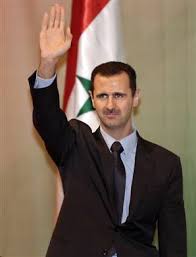
Syria's leader sent a July 4 message full of praise to President Barack Obama on Friday and invited him to visit Syria — the latest signs Damascus is hedging its bets in Mideast politics, warming up to its rival the United States at a time when its longtime ally Iran is in turmoil.

The United States and its Arab allies have been hoping to pull Syria out of the fold of Iran and Islamic militant groups in the region.

Damascus so far appears unlikely to take such a dramatic step, but it does appear worried about Iran's reliability and the long-term impact of that country's postelection unrest. Also, its Lebanese ally Hezbollah suffered a setback when its coalition failed to win June parliament elections, beaten out by a pro-U.S. bloc.

Syrian President Bashar Assad has been expressing hopes for better ties with Washington for months. But the latest developments may make dialogue look even more attractive. HERE THIS WHOLE AP STORY

Thursday, July 2, 2009

Egypt: Power Has Already Been Transferred

Last week, the daily newspaper al-Shorouk reported that important figures in Egypt's ruling National Democratic Party (N.D.P.) are meeting to decide the name of the party's 2011 presidential candidate. The article didn't cite any sources, and the N.D.P. issued a flood of statements denying the occurrence of such a meeting. However, the rumor has caused the issue of succession in Egypt to resurface. It doesn't matter how hard the N.D.P. denies the speculation and conjecture, it is going to have to name a candidate in the near future.

Although President Hosni Mubarak's son, Gamal (picture), managed to make a quiet, backroom entry into the political scene, his emergence as the N.D.P.'s next candidate is clear. He gives major speeches, tours poor villages and has a say in all the economic, social and political issues. As Egypt has always been run as a one-man show, the elite usually reflect the ruler's ideology, identity and beliefs. Egypt's economic, political and social trends indicate that Gamal Mubarak already has a wide breadth of influence. MORE HERE

Wednesday, July 1, 2009

Book Review: James Maskalyk, Six months in Sudan

Charles R. Larson, Professor of Literature at American University, Washington, D.C, reviews James Maskalyk, Six Months in Sudan: A Young Doctor in a War-Torn Village (2009). He calls it 'a disturbing and utterly brilliant book'.

Sometimes you start writing one book and end up writing another. Nowhere is this more apparent than in James Maskalyk’s painfully honest account of his six months as an emergency physician in a remote area of Sudan. Answering the call for Médecins sans Frontières (MSF), Maskalyk served as a doctor in a town called Abyei, trapped—one might say—at the crossroads of the warring factions within the country. His account of his duties is often disturbing, particularly in the details of the horrors he encountered virtually every day. But the real story is the transformative nature of the experience itself, which exposed him to the depths of his self, and packed such an emotional wallop that he will probably never be the same. MORE HERE