Tuesday, December 29, 2009

Poverty in the Arab World

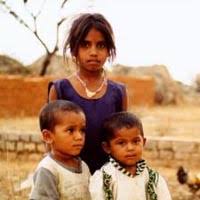
The Arab media have been flooded with reports on poverty rates throughout the Arab world, and despite various discrepancies, the consensus is that poverty and unemployment in these nations are threatening their future growth.

A report published by the Arab League and the United Nations Development Program (UNPD) Sunday said that 140 million people were living under the poverty line throughout the Arab world.
Arab League Secretary-General Amr Moussa, however, recently told a League convention that 65 million people were living under the poverty line throughout the Arab world, and while the discrepancy is large, it may stem from various definitions of the "poverty line." MORE HERE

Saturday, December 26, 2009

Situation of the Christians in the Arab World

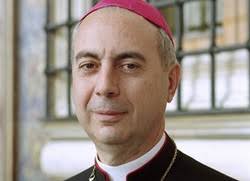
The ongoing Christian flight from the Middle East was high on the agenda of the Vatican's secretary for the relations with states, Archbishop Dominique Mamberti, when I met with him recently in Rome.
The lengthy exodus of ancient Christian congregations from the greater Middle East's last redoubts of religious pluralism is accelerating. Terrorism, conflict, and the rise of intolerant Islamism are to blame, Vatican officials explain. There is a real fear that the light of Christian communities that was enkindled personally by the apostles of Jesus Christ could be extinguished in this vast region that includes the Holy Land.
This trend could be reversed or at least halted, but probably not without Western help. Thus far, the rapid erosion of Middle Eastern Christianity has drawn little notice from the outside world. MORE HERE

Friday, December 25, 2009

Christmas in Bethlehem


BETHLEHEM, West Bank (Reuters) - Thousands of pilgrims and dignitaries crowded into Bethlehem's Church of the Nativity for a Christmas Mass, where Latin Patriarch Fuad al-Tuwal urged visitors to return home bearing a message of peace for the Holy Land.

Entertaining crowds outside, bagpipers played carols and whirling dervishes danced, unfurling giant white skirts embroidered with the word peace in various languages.

Some 15,000 visitors packed into the stone flagged square opposite the small Door of Humility where pilgrims stoop to enter the multi-denominational church, built above the spot where Christians believe Jesus was born. MORE HERE

Thursday, December 24, 2009

Syrian Orthodox Church in Mosul attacked

Last week we requested prayer after bomb attacks outside two churches in Mosul on 15th December. We regret to report that there was a further attack yesterday (Wednesday 23rd December) at another church in Mosul.

A Syrian Orthodox Church appears to have been deliberately targeted. Two Muslims were killed outside this church building. One report indicates a neighbouring Chaldean Church may also have been damaged in the bombing.

Recall that Security forces had voiced concern in recent days that Christmas gatherings and Shiite Ashura holiday observances would potentially draw attacks. In addition to the attack against the church in Mosul, reports indicate six Shiite pilgrims preparing for Ashura were killed by bombs exploding at different times on Wednesday in three Baghdad neighbourhoods. 43 People are reported to have been wounded in these attacks.

Some churches had curtailed their programme of events. After yesterday's attack, all services at Catholic churches have been cancelled in Mosul and Kirkuk.

These attacks are occurring within a context of an increased number of bomb attacks, which many regard as part of a campaign to destabilise the country in the run up to parliamentary elections scheduled for March next year.
(c) Middle East Concern

Saturday, December 19, 2009

What Morocco thinks of Algeria. And of Egypt

Finally! The Algerian people have had a chance to witness the true feelings of millions of Moroccans harbor toward their neighbors to the east.  Moroccans’ celebrations of the historic win of the Algerian soccer team against Egypt were heartwarming. The spontaneous explosions of joy by thousands of Moroccans celebrating a well deserving Algerian team were unprecedented considering the tense relations between Rabat and Algiers over the Western Sahara conflict. Moroccans, holding Algerian flags, streamed into the streets of several Moroccan cities including Casablanca, Rabat, and the border town of Oujda rejoicing along with the Algerian public across the “closed” borders.
In the last thirty years, the Algerian people were subjected to several rigorous anti-Morocco campaigns conducted by the Algerian Military establishment. To reinforce their grip on power, some in the Algerian  demonized Morocco, making it a favorite punching.  Events such as the Sands war, the Moroccan Green March, the mass expulsion of thousands of Moroccans by the Algerian government, and Morocco’s impulsive and one sided closure of Morocco-Algeria borders in 1994 led to a progressive worsening the relations between the two peoples and re-enforced the “evil” image of“suspicious” Morocco in the eyes of millions of Algerians. MORE HERE

Thursday, December 17, 2009

Pew Forum: US 'allies' Egypt and Saudi Arabia very poor on religious freedom


U.S. allies Saudi Arabia and Egypt are among 10 mostly Muslim nations whose governments impose the most curbs on religion, according to a report on Wednesday by the Pew Forum on Religion & Public Life.
Afghanistan's government also ranked poorly, highlighting a potentially sensitive diplomatic flashpoint as President Barack Obama sends more U.S. troops to the Central Asian country to quell a growing insurgency.
The Pew report says nearly 70 percent of the world's 6.8 billion people who live in countries that have severe restrictions on religion.
The report ranked countries by two measures: government restrictions on religion and restrictions from violence or intimidation by private individuals or groups. Saudi Arabia was the only country to rank "very high" in both measures. MORE

Wednesday, December 16, 2009

Iraqi Christians have requested our prayers

In Mosul there were three bomb attacks outside churches. At approximately 10:30 a.m. on 15 December small bomb damaged the wall of a Syriac Catholic Church. Four people were killed, possibly bystanders, when a second bomb exploded 10 minutes later and grenades were thrown at a nearby Christian school. That afternoon a larger bomb at a Syriac Orthodox Church caused significant damage, injuring a number of people.

These attacks followed the bombing on 26th November of two other church properties in Mosul. There were no casualties, though a Chaldean Catholic Church was virtually destroyed. Church leaders in Mosul described these attacks as the latest in a campaign to force Christians to leave.

Church leaders in Baghdad have been warned by the authorities that further bomb attacks might target church buildings, especially during the Christmas period.

These attacks have occurred within a context of an increased number of bomb attacks, which many regard as part of a campaign to destabilise the country in the run up to parliamentary elections scheduled for early next year. Recent large-scale bomb attacks in Baghdad have targeted government buildings. However, some church properties located nearby have been damaged, including the Anglican Church and the offices of the Chaldean Patriarch. In the latter case nobody was injured, despite the building being badly damaged, because all staff were attending mass at the time.

Iraqi Christians request our prayers that:
a.  All Christians in Iraq will know the Father's peace and protection as they attend worship services over the Christmas period
b.  Church leaders will know the Spirit's wisdom and guidance in all aspects of planning services and providing pastoral support to their congregations
c.  The bereaved will know the peace and comfort of Jesus
d.  The wounded and traumatised will know the healing touch of Jesus, both physically and psychologically
e.  The perpetrators will be convicted by the Spirit and seek the Father's forgiveness through the Son's death for them
f.  The authorities will provide adequate protection, and actively promote religious and other forms of tolerance.
Source: www.meconcern.org