
A state-run television channel and a few domestic terrestrial stations, which mostly re-run programmes from other satellite channels, are almost all that is on offer in the Palestinian Territories. Two other outlets — Al Aqsa, set up by Hamas in Gaza, and Al Quds, which many brand as Hamas-light — are partisan stations. The private sector, so far, has shown very little interest in television broadcast, probably due to the uncertainty that characterises the situation in Palestine and the considerably high risks involved in launching a private television channel.
Today, after years of state-run or partisan media outlets in Palestine, the time has come for a new satellite television channel that is entirely private: a channel that does not belong to a particular political party or governmental body but one that aspires to reflect the interests of the overwhelming majority of Palestinians, those living in the Palestinian territories and in the Diaspora. Such a channel would also provide the Israeli enemy/neighbour with a unique window onto aspects of Palestinian society with which it is completely unfamiliar. MORE HERE
Friday, July 31, 2009


Islam and pluralism are not incompatible
 Dr Maher Y. Abu-Munshar writes in the Daily Star (Lebanon) about Islam and pluralism:
There is a pervasive view in the media today that Islam does not support pluralism. Sadly, we often hear how difficult it is for non-Muslim minorities to live in peace and harmony in Muslim countries. Violent extremists who misuse Islamic theology to justify terrorist attacks have exacerbated prejudices against Muslims and today many people think that Muslims do not believe in pluralism and diversity.
By contrast, history reveals that Islam – as preached in the Koran and exemplified by the life of the Prophet Muohammad and his companions – actually accepts, celebrates and even encourages diversity.
It should be noted that the term “minority” has no place in Islamic law. It has no place in Sharia (or law based on Islamic principles) and jurists have never used the term. Rather, it emerged from Western societies, which use it to distinguish between ethnic groups.
Thursday, July 30, 2009
Nile Water Deal rejected by Egypt and Sudan
 Hopes that the 10 Nile Basin countries would sign a water-sharing agreement at a meeting in Alexandria to settle one of the planet's most contentious water issues have been dashed -- for now at least -- after Egypt and Sudan rejected any cuts in their traditional quotas.
But the prospects of a long-term accord on an equitable share-out of the waters of the 3,470-mile Nile, the world's longest river, remain dim, largely because Egypt, the largest user, refuses to surrender its veto powers and its historic rights over the river that has been its lifeblood since time immemorial.
Wednesday, July 29, 2009
Debate in Indonesia about new bible translation
The Indonesian organization Yayasan Lentera Bangsa has published a new translation of the Bible in Indonesian. Allah does not appear in the Kitab Suci Indonesian Literal Translation (KS-ILT). Instead, the publishers transliterated Hebrew terms (such as Elohim) and substituted some less-common Indonesian names for God.
"Coincident with the forbidding of the use of Allah by non-Muslims in Malaysia, we think it is the time for us to release ourselves from the dilemma," said editor Jahja Iskandar.
Mainstream churches, however, have been hostile to the KS-ILT. Neither the Bible Society of Indonesia nor that of Malaysia has approved the translation. The National Evangelical Christian Fellowship (NECF) of Malaysia issued a statement "strongly opposing" the translation. "We continue to maintain the right to use Allah as it has been so used for over 300 years in Malaysia," the group said.
Evangelical observers support NECF's move. "Theologically and missiologically, Allah is a very appropriate way [for Southeast Asian Christians] to refer to God," said Ajith Fernando, national director of Youth for Christ in Sri Lanka. MORE HERE in Christianity Today
New Book: Vivienne Stacey on Spiritual Warfare
We are finishing a new textbook on Spiritual Warfare; this will be a compilation of Vivienne Stacey's best writings on the occult and Spiritual Warfare as it relates to the Muslim World.
Vivienne Stacey (b. 1928) has been a missionary in the Muslim world for over 50 years. She began her career in Pakistan, but her work developed into a global ministry of teaching and writing. She has written much to help Christians understand Islam and to minister to Muslims, and also on the role of women in mission. Her most unique contribution, though, has been her writings on spiritual warfare. These are based on her understanding of, and experience with, the spiritual forces of evil. This book contains Vivienne Stacey’s best on that theme.
More HERE
Vivienne Stacey (b. 1928) has been a missionary in the Muslim world for over 50 years. She began her career in Pakistan, but her work developed into a global ministry of teaching and writing.
 She has written much to help Christians understand Islam and to minister to Muslims, and also on the role of women in mission. Her most unique contribution, though, has been her writings on spiritual warfare. These are based on her understanding of, and experience with, the spiritual forces of evil. This book contains Vivienne Stacey’s best on that theme.
More HERE
Tuesday, July 28, 2009
Islam's Civil War - by Barry Rubin
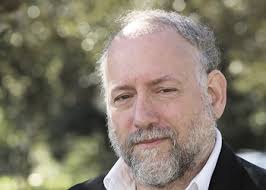 I’m reading a good book by Richard Dowden, a veteran reporter on Africa who now heads the Royal African Society. It’s entitled Africa: Altered States, Ordinary Miracles, published recently by Public Affairs press. Especially interesting from a Middle Eastern standpoint is his chapter on Somalia:
“Somalis are Sunni Muslims, but always followed the Sufi tradition….Their religious spirit is tolerant…and is mixed with elements of Somali’s pre Islamic Cushitic beliefs....In recent years their culture and religious practice have been undermined by Arab Wahabi preachers and Saudi money. Until recently Somali women played a major role in society, dressed in bright colors and did not cover their heads or arms. Today Somali women are expected to dress in the full Saudi black niqab and obey their men.” MORE HERE
Saturday, July 25, 2009
China taregets the Arab World with new TV channel
 China Central Television (CCTV) launched an Arabic-language channel for the Middle East and Africa on Saturday as part of the government’s efforts to expand its relations with the Arab and Muslim world.
The 24-hour channel will air in 22 Arabic-speaking countries, reaching a total population of nearly 300 million people, CCTV said in a statement at the launch of the new service. The new channel is available through Nilesat and Arabsat services for viewers in the Middle East.
“This is the fourth foreign-language channel we are introducing, after English, French and Spanish,” the official spokesman from the embassy in Riyadh told Arab News. MORE HERE
Subscribe to:
Posts (Atom)


