
 Rev Michael Youssef from Atlanta broadcasts Arabic Christian TV programs to the Arab World on two transponders, namely Hotbird and Nilesat. The channel is called Al Malakoot (the Kingdom) in Arabic. More information on where this channel and many other Arabic Christians channels can be viewed, can be found HERE
Tuesday, June 15, 2010
Rev Michael Youssef broadcasting on TV in Arab World
Rev Michael Youssef from Atlanta broadcasts Arabic Christian TV programs to the Arab World on two transponders, namely Hotbird and Nilesat. The channel is called Al Malakoot (the Kingdom) in Arabic. More information on where this channel and many other Arabic Christians channels can be viewed, can be found HERE

Thursday, June 10, 2010
Islamic Republic of Sudan

Egyptian government tries to force Church to change its ethics

The Coptic Orthodox Church in Egypt says there is no power on earth that can force it to violate the teachings of the Gospel. This was affirmed in a communiqué responding to an Egyptian High Court ruling that the Church must grant permission to divorced people to marry again.
Egypt only recognizes civil marriage when it is accompanied by a religious marriage. The Coptic Orthodox Church is continuing with legal appeals to the May 29 decision, according to Bishop Armiya, secretary of Orthodox Pope Shenuda III. The May decision rejected an appeal already presented by the leader of the Coptic Church and reaffirmed a lower court ruling.
The case at hand has been brought to the courts by Hani Wasfi Naguib, a divorced man who wants to re-marry. "There is no force on earth that can oblige the Church to violate the teachings of the Gospel and the laws of the Church based on 'what God has joined together let no man put asunder,'" the communiqué affirmed. MORE HERE
Egypt only recognizes civil marriage when it is accompanied by a religious marriage. The Coptic Orthodox Church is continuing with legal appeals to the May 29 decision, according to Bishop Armiya, secretary of Orthodox Pope Shenuda III. The May decision rejected an appeal already presented by the leader of the Coptic Church and reaffirmed a lower court ruling.
The case at hand has been brought to the courts by Hani Wasfi Naguib, a divorced man who wants to re-marry. "There is no force on earth that can oblige the Church to violate the teachings of the Gospel and the laws of the Church based on 'what God has joined together let no man put asunder,'" the communiqué affirmed. MORE HERE
Monday, June 7, 2010
Roman Catholic Bishops Deplore Mideast Christians’ Plight

Friday, June 4, 2010
Egypt in trouble over Gaza blockade

Sunday, May 30, 2010
Next drought in Africa can lead to war over Nile waters
Bangladeah blocks facebook over blasphemy
Bangladesh says it has blocked the popular social networking website Facebook over a page that urges people to draw images of Islam's prophet Muhammad. Chief telecommunication regulator Zia Ahmed said Sunday that access to the site has been temporarily blocked because it was publishing caricatures that may hurt the religious sentiments of people in the Muslim-majority nation.
Thousands of Muslims protested in Dhaka last week against what they called the website's "blasphemous content" because of a page called "Everybody Draw Mohammed Day" that encouraged users to post images of the prophet.
Pakistan earlier blocked Facebook over the same page.
Thousands of Muslims protested in Dhaka last week against what they called the website's "blasphemous content" because of a page called "Everybody Draw Mohammed Day" that encouraged users to post images of the prophet.
Pakistan earlier blocked Facebook over the same page.
Wednesday, May 26, 2010
Osman Mirghani: Arabs neglect their 20 million handicapped

Sunday, May 23, 2010
Morocco expelled 100+ missionaries in past 3 months
Morocco has expelled 100 foreign Christians since March because they allegedly tried to convert Muslims, the harshest crackdown in decades, Worthy News learned Saturday, May 22. Morocco's Islamic Affairs Minister Ahmed Toufiq said in published remarks that the deportations, were needed for "order and calm" and to avoid a clash between faiths.
The latest expulsion was that of Spaniard Francisco Paton Millan, the head of a small energy company, who was ordered last week to leave the country for trying to convert Muslims to Christianity, church workers and European diplomats said. MORE HERE
The latest expulsion was that of Spaniard Francisco Paton Millan, the head of a small energy company, who was ordered last week to leave the country for trying to convert Muslims to Christianity, church workers and European diplomats said. MORE HERE
Pakistan blocks 'blasphemous' web pages
Pakistan has blocked 800 web pages and URLs to limit access to "blasphemous" material, extending a crackdown that has already banned access to Facebook and YouTube, an official said yesterday. The Pakistan Telecommunications Authority (PTA) banned access to Facebook, YouTube and other links, which included restricted access to Wikipedia, in view of what it called "growing sacrilegious content" this week.
"At least 800 individual web pages and URLs have been blocked since the government's orders to shut Facebook and YouTube," Wahaj us Siraj, a spokesman for the Internet Service Providers Association of Pakistan said.
Mr Siraj's remarks came hours after the Facebook user who organised an "Everyone Draw Mohammed Day" competition to promote "freedom of expression" evidently took down the page along with a separate blog about the campaign. MORE HERE
"At least 800 individual web pages and URLs have been blocked since the government's orders to shut Facebook and YouTube," Wahaj us Siraj, a spokesman for the Internet Service Providers Association of Pakistan said.
Mr Siraj's remarks came hours after the Facebook user who organised an "Everyone Draw Mohammed Day" competition to promote "freedom of expression" evidently took down the page along with a separate blog about the campaign. MORE HERE
Wednesday, May 19, 2010
Interview with Gaza's Army of Islam - Palestine is an Islamic Waqf
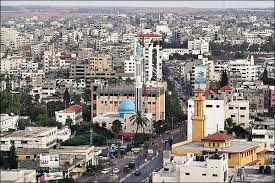
"But enough about the movement, its time to move is subject to its men and their ability to stand in the face of the tyrannies," Al-Ansari said from his secret hideout and weapons store, settling in for an in-depth discussion on the relationship of the movement to Al-Qaeda, tensions with the ruling Hamas party, and its vision for the Palestinian national struggle. MORE HERE
Monday, May 17, 2010
Morocco continues to expel Christian expats
International Christian Concern (ICC) has learned that 23 foreigners have been notified of expulsion from Morocco since May 10, marking a second wave of Christian deportations from the country.
A spokesman for the US Embassy in Morocco in an interview with ICC said, “We are very concerned about this. While there were fewer Americans in this round than there were in the first round of this in early March, we’re still following it very closely, and we have expressed concern, as have other diplomatic missions here, to the Moroccan authorities about this.
The recent notifications of expulsion are officially attributed to proselytizing, which is illegal under Moroccan law. Earlier this year, the enforcement of anti-proselytizing laws resulted in the deportations of approximately 40 US citizens and many other foreign expatriates from Morocco. However, Moroccan authorities have refused to explain the charges. “[The Moroccan government] has been very cagy about really giving any information to people, which has been disturbing,” said the US Embassy spokesman. “But we understand it’s all based on alleged proselytizing.” MORE HERE
A spokesman for the US Embassy in Morocco in an interview with ICC said, “We are very concerned about this. While there were fewer Americans in this round than there were in the first round of this in early March, we’re still following it very closely, and we have expressed concern, as have other diplomatic missions here, to the Moroccan authorities about this.
The recent notifications of expulsion are officially attributed to proselytizing, which is illegal under Moroccan law. Earlier this year, the enforcement of anti-proselytizing laws resulted in the deportations of approximately 40 US citizens and many other foreign expatriates from Morocco. However, Moroccan authorities have refused to explain the charges. “[The Moroccan government] has been very cagy about really giving any information to people, which has been disturbing,” said the US Embassy spokesman. “But we understand it’s all based on alleged proselytizing.” MORE HERE
Sunday, May 16, 2010
Sudan arrests Hassan al-Turabi - again
 Sudanese authorities arrested Islamist opposition leader Hassan al-Turabi (picture) at his home late on Saturday, a month after the country's first competitive elections in 24 years, his secretary said.
 "At around midnight (2100 GMT), a group of security officers arriving in three cars, came and took Hassan al-Turabi from his home," Awad Babakir told AFP.
Turabi, once President Omar al-Beshir's mentor but now one of his fiercest critics, had denounced last month's elections as fraudulent and said his Popular Congress Party would not join a future government.
Beshir was declared winner in Sudan's first multi-party election since 1986, a vote marred by an opposition boycott, logistical problems and accusations of fraud. MORE
Saturday, May 15, 2010
Arab Egypt and Sudan vs. Africa over Nile water
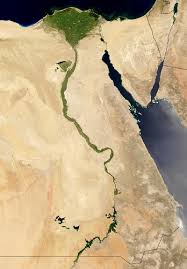
Colonial-era agreements gave the biggest share of water to the two downstream countries, Egypt and Sudan. But as Al Jazeera's Mohamed Vall explains, upstream nations are now pushing for a greater share. Watch this TV programs here
Tuesday, May 11, 2010
Food shortages in Arab World
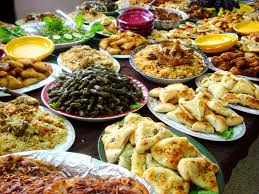
Tareq A-Zadjali, director general of the Arab Organization for Agriculture Development, said much of the funding for agricultural expansion needs to be secured from private Arab investors.
"We have an annual food security gap of between 27 and 29 billion dollars," he told The Media Line. "We want to reduce this gap."
The population in the Middle East, currently numbering around 335 million, is projected to reach some 545 million by the year 2030, creating what A-Zadjali claimed will be a deficit of $71 billion should investment not be secured. MORE HERE
Sunday, May 9, 2010
Child labor in Arab World
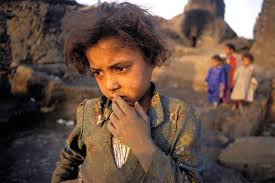 From shoeshine boys on the streets of Sana’a to underage labourers on Egyptian farms, a new UN report warns of significant levels of child labour in the Arab world and a lack of effective monitoring to tackle abuses.
Child labour monitors warn that patchy data leave Arab policymakers struggling against a problem that sees young people exposed to toxic agricultural chemicals on farms and life-threatening machinery in factories and workshops.
The UN’s International Labour Organisation (ILO) presents an estimate of 13.4 million child labourers – about 15 per cent of the region’s junior population – but fears the real figure could be much higher because many work off the books.
“Take Egypt as an example; it is visible to any visitor to the country that child labour is a problem. You can see it on the surface – but that doesn’t give a basis for planning,” said Frank Hagemann, the ILO’s policy chief on child labour. MORE HERE
Wednesday, May 5, 2010
Al Shabaab Militants Execute Christian Leader in Somalia
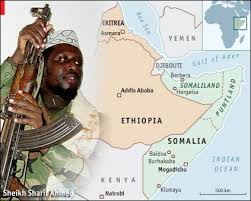
Before he was fatally shot on Tuesday (May 4) in Xarardheere, about 60 kilometers (37 miles) from Jowhar, 57-year-old Yusuf Ali Nur had been on a list of people the Islamic extremist al Shabaab suspected of being Christian, sources who spoke on condition of anonymity told Compass. Al Shabaab, said to have links with al Qaeda, has vowed to rid Somalia of Christianity.
The militants fighting the Transitional Federal Government (TFG) in Mogadishu had been engaged in a two-hour battle with a rival rebel group, the Ahlu Sunna Waljamer, which had taken control of the Xarardheere area, before they came across Nur. Nur had lived in Xarardheere since leaving Jowhar in July 2009.
Eyewitnesses said that after al Shabaab took control of the area, they went from house to house looking for enemy fighters when they arrived at Nur's rented home at about 10:30 a.m. Sources said that upon finding Nur, one of the militants remarked, "Oh! This is Yusuf, whom we have been looking for," before they sprayed him with bullets at close range.
Nur is survived by his wife, whose name was withheld for security reasons, and three children, ages 11, 9 and 7. MORE HERE
Sunday, May 2, 2010
Antony Loewenstein: 'Isolating Iran is part of the ‘great energy game’
 Foreign Policy journal on Iran and US foreign policy:
The Middle East is witness to continuous developments these days, such as Iran’s active diplomacy to attract the indispensable 118-member bloc of non-aligned countries to support its nuclear program, the growing isolation of Israel in European countries and within academic circles in the U.S., Arabs’ fears of losing the power game in the Persian Gulf region, and the expansion of illegal settlements of Israel in the West Bank and its unremitting disobedience to United Nations Security Council resolutions. MORE HERE
Friday, April 30, 2010
Publishing books in Egypt
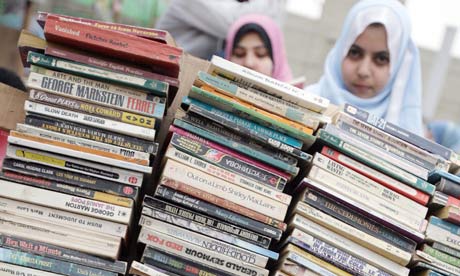
"We can't compete with the big firms in terms of profits, but the new wave of authors will always be sitting here," says the 52-year-old with a grin. "Yes, we have poverty and limited resources. But we also have the future." MORE HERE
Sunday, April 25, 2010
Islamic Televangelism: Religion, Media and Visuality in Contemporary Egypt

In the Egyptian hit film Awqaat Faraagh (Leisure Time, 2006), three young college students experience an existential crisis when one of their friends suddenly dies while crossing the street to buy them more beer. Sitting in a souped-up Mercedes Benz filled with hashish smoke and scantily clad girls, the three boys watch in horror as their friend, high and tripping, is hit by a car and immediately falls to the ground, breathing his last with the words: “I am afraid, I am afraid.” Chastened and shocked by this tragedy, they vow to repent their dissolute lifestyles and lead more moral lives. Instead of watching Internet porn, they begin to download and watch together episodes of a religious talk-show by Amr Khaled, an immensely popular Islamic da’iya (activist, “caller” to Islam), who regularly appears on satellite television. MORE HERE
Subscribe to:
Posts (Atom)


