Wednesday, October 7, 2009

Daoud Kuttab: Why leaders of Palestine agreed to postpone the Goldstone Report

The angry political and public reaction to the decision by the Palestinian leadership to postpone discussions of the Goldstone war crimes report requires a sober look at the reasons and lessons that need to be learned to avoid repetition.
Anger came from Palestinians and non-Palestinians alike, including many supporters of Palestine. Arab media, especially Al Jazeera dedicated hours and hours of prime time TV to give space to bombastic attacks against Mahmoud Abbas and his leadership. Public accusations calling Abbas a traitor who sells out the blood of Palestinians in Gaza have become so common that it is worrisome.
MORE by Daoud Kuttab on this issue HERE

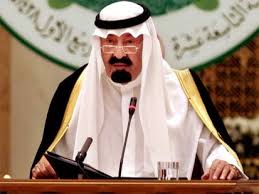
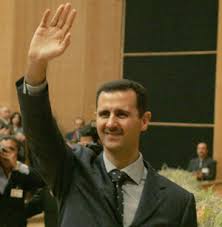
King Abdullah (SA) visits President Asad (Syria)


The visit of King Abdullah, Custodian of the Two Holy Mosques, to Syria is the first embarked upon by an Arab leader since the assassination of Lebanon’s Premier Rafiq Hariri in 2005. It marks a new era in relations between Syria and Saudi Arabia that will most certainly define Syria’s relations with rest of the Arab world as well.
Saudi Arabia’s keenness to break the ice with Syria through negotiations and diplomatic overtures for achieving the larger good in the Middle East has seen Syrian President Bashar Al-Asad meeting with King Abdullah three times over the last two years.
Diplomats of both countries deserve praise and admiration for their dedication and sincerity that eventually resulted in this historic visit. The timing could not more perfect, as celebrations are underway in Syria for the anniversary of the 1973 October War, a war that is definitely a reminder to the Arabs of what unity can achieve.
Observers have already expressed high hopes of what this visit might achieve. Could this be the beginning of a collective effort to tackle issues that hurt us all? Could this be the birth of a united body that results in the One Ummah that we have all been dreaming about? We definitely hope so.
Comment in Saudi Gazette.

Tantawi: Niqab is not Islamic

Sheikh Mohamed Tantawi, dean of al-Azhar university, said full-face veiling (niqab) is merely a tradition that has nothing to do with the Islamic faith.
Although most Muslim women in Egypt wear the Islamic headscarf, increasing numbers are adopting the niqab as well.
The niqab question reportedly arose when Sheikh Tantawi was visiting a girls’ school in Cairo at the weekend and asked one of the students to remove her niqab.

Egypt's parliament has rejected a request from two opposition lawmakers to seek the dismissal of the country's top Islamic cleric over his planned ban on women's veils at a top university, Al Jazeera reported.
Muhammad Sayed Tantawi is planning to bar female students wearing Islamic niqab from the schools of Al Azhar University, saying the garment has "nothing to do with Islam."
A Muslim Brotherhood spokesman told the Qatar-based news network that preventing women from wearing veils would "undermine our moral foundations and mutual respect," and "discredit Islam."
Group members Hamdi Hassan and Ibrahim Abu Auf have urged parliament to formally ask Prime Minister Ahmed Nazif to dismiss the cleric over the "illegal" ban.
However, their request was rejected by the 454-seat lower house. The Muslim Brotherhood has just 88 seats in the chamber.
The proposed ban has been widely seen as part of the Egyptian leadership's crackdown on resurgent ultra-conservative elements in the country.
On Saturday, dozens of female students protested against the ban outside the university.
Shaikh Ali Abu al-Hasan, the former head of the Fatwa Council at the Islamic Studies Institute (ISI) in Cairo, was quoted by Al Jazeera as saying although women are not required by Islam to cover their faces, Al Azhar University must give them freedom of choice.
"The niqab is not in contravention of the sharia or Egyptian law," he said.

Saturday, October 3, 2009

EGYPT: Virtually, Some Real Freedom


Egyptians critical of their government are using new media and the Internet to expose its improprieties and press for social change.

Twitter users in Egypt have provided minute-by-minute coverage of labour strikes, while Facebook groups are rallying opposition against the ruling party and its policies. But perhaps the most striking example of new media activism are the dozens of videos of police brutality - many filmed using mobile phone cameras - that have been uploaded to blogs and YouTube.

"The Internet has created a new type of activism," says blogger Sherif Abdel Aziz. "It took the political voice from activists and gave it to the average citizen."

Internet use is growing rapidly in Egypt as connection costs fall. More than 12 million Egyptians, about 15 percent of the population, are logging on regularly. And in doing so, they are being exposed to a flood of news and views outside the sphere of the state-dominated press. MORE HERE

UAE measuring TV-watching habits

The initial results of the recently launched TV audience measurement initiative has proved positive trends in the in the study of application of the project for the measurement of TV audience in the United Arab Emirates.
The National Media Council (NMC) and the Telecommunications Regulatory Authority (TRA) were jointly apprised of the findings by the consulting firm appointed to implement the project. The NMC and TRA launched the TV Audience Measurement initiative as a critical step towards greater development of the UAE's media industry after a series of workshops and industry consultations held earlier this year. During these discussions, broadcasters, advertisers and members of the general public expressed the need for an independent, NMC-led initiative to establish improved transparency in TV audience measurement. The Steering Committee for the project took a comprehensive overview of the first phase, which lasted for eight weeks, during which interviews with more than 100 key players in the field of Information including officials from government and television stations as well as with advertisers, viewers, experts and others were conducted. Phase I aims to provide the basic rules to move forward in implementing the project to measure the percentage of television viewers in the UAE by offering proposals on aspects of restructuring and corporate governance, cost as well as technical regulations and quality control. A detailed implementation plan covering all activities and time periods necessary to the launch of the system to measure the rate of TV viewers was also explained. The officials at the NMC and TRA appreciated the media organisations for their strong support for the project and expressed satisfaction over the method in which the preliminary study was prepared. The coming weeks will witness more meetings to determine the plan and goals of each phase in preparation for the implementation of the project. The participation of key stakeholders has been earmarked as the critical success factor for the initiative. Although industry groups have been pursuing such alignment for some time, the NMC and TRA's involvement is expected to catalyze the process, which will have far-reaching, positive impact on major multinational broadcasters and advertisers. © Copyright Emirates News Agency (WAM) 2009.

If Israel bombs Iran's nucleair plant to smithereens, then...

The Pakistan Daily gives gives possible scenarios for what happens after Israel bombs Iran's nucleair plant:

Now that the Iranian/Six Power talks have concluded with no breakthrough (Netanyahu will never accept the ‘final’ uranium refining being done in Russia as a breakthrough), we can expect an Israeli attack on Iran at any time. We need to consider what will happen next.

Scenario 1: The Israeli Air Force bombs the major Iranian nuclear sites. The destruction of the fully fueled nuclear reactor causes massive deaths. Iran does nothing. This is the pre-school level thinking scenario and believe it or not, it is the scenario that is most likely covered by the corporate owned mainstream news media. If you believe this scenario it is likely you should also believe in Santa Clause, the Easter Bunny, and the Tooth Fairy.  THE OTHER 5 SCENARIO'S HERE

Friday, October 2, 2009

Syria's influence in Lebanon increases

When Syria's vice president recently boasted that his country is now stronger than ever in Lebanon, many Lebanese dismissed his words as wishful thinking. Months of political stalemate in Beirut may show how right he was.
Lebanon's pro-Western politicians have been unable to form a government since winning June elections, and many of them blame Damascus, saying it is using its allies in Lebanon — led by Hezbollah — to stymie negotiations and show that nothing can get done without its say-so. The whole AP story HERE