Thursday, April 30, 2009

Christianity's Lost History

BOOK REVIEW by J. Peter Pham of Philip Jenkins’s most recent book, The Lost History of Christianity (HarperOne, 2008):

Nowadays, any serious discussion of the shifting demographics of Christianity inevitably leads to Philip Jenkins, the Edwin Erle Sparks Professor of the Humanities in History and Religious Studies at Penn State University.

With the monumental trilogy he completed two years ago—The Next Christendom: The Coming of Global Christianity (2002, revised 2007), The New Faces of Christianity: Believing the Bible in the Global South (2006), and God’s Continent: Christianity, Islam, and Europe’s Religious Crisis (2007)—Jenkins transformed perceptions of Christianity in the world today with the convincing case he made that not only has the center of gravity in the Christian world “shifted inexorably southward, to Africa and Latin America,” but much of conventional wisdom about religion in Europe (and, ultimately, North America) needs to be reconsidered. In the course of developing his argument about the present and future, Jenkins also hinted that the dynamics driving the changes were not entirely new, and the church’s past contained more than its share of surprises. HERE THE WHOLE REVIEW

Break the crosses, kill the pigs. Egypt vs Christians?

In the Guardian, Brian Whitaker questions why Egypt has all pigs killed:

Farmers in Egypt clashed yesterday with officials who had come to destroy their pigs. They blocked the roads and some hurled stones at trucks and bulldozers sent by the health ministry. The trouble broke out after the government ordered the slaughter of all pigs in Egypt amid a wave of hysteria about "swine" flu.

The Mubarak regime's record in matters of public health and safety is a dismal one: more than 1,000 dead in a ferry disaster, more than 370 dead in a train fire, 50 dead in a theatre fire, plus treacherous roads, and buildings that fall down regularly on top of their occupants. Egypt also continues to have cases of bird flu – 26 people have died there since 2006, making it the worst-affected country outside Asia, where the disease originated.

This time, though, the regime has acted with uncharacteristic haste – even before there is a single suspected case of the H1N1 virus in the country, either among humans or even pigs. But its decision to kill 300,000-400,000 pigs is not just costly. It is also pointless.

As the UN Food and Agriculture Organisation's chief veterinary officer put it yesterday, the cull is "a real mistake". "There is no reason to do that. It's not a swine influenza, it's a human influenza," he said. Time magazine has more, explaining why we shouldn't blame pigs. MORE IN THE GUARDIAN

Al-Qaida seems to have lost it in North Africa.

Michael Lipin writes on GlobalSecurity.org about the demise of al-Qaida in North Africa:

International experts on al-Qaida say the terrorist movement is facing a crisis in North Africa, where it once hoped to build a regional network. They say only about 500 Islamist fighters remain in al-Qaida's North African base of Algeria, down from more than 10,000 in the country in the mid-1990s.

French historian Jean-Pierre Filiu says since the 1990s al-Qaida has been trying to use Algeria as a base to set up a North African network. But he says al-Qaida failed to achieve its goal because Algerian Islamists were more focused on fighting Algeria's military rulers, who canceled 1992 elections that an Islamist party was poised to win.

Filiu, a professor at the Paris Institute of Political Studies, says the insurgents numbered more 10,000 in the mid-1990s. Most of them were defeated or surrendered to the government during the war.

Some Algerian Islamists however formed a splinter group that swore allegiance to al-Qaida in 2007 and began suicide bombings against foreigners and locals. Now, Filiu says only about 500 fighters remain in action, calling themselves al-Qaida in the Islamic Maghreb - a reference to North Africa. MORE HERE

Only 18% of Muslims in Denmark wants some form of sharia

Close to a fifth of Muslims in Denmark want to see Sharia law implemented in Denmark. A study conducted by analysis institute Capacent for DR news shows that 18% of Muslims in Denmark declare they 'agree' or 'completely agree' with the statement: "Sharia law should be integrated into Danish law".

Sharia legislation is several hundred years old and built on principles from the Koan and report of the Prophet Muhammad's life.

In several Western countries, some Sharia law is implemented. Here in Denmark it's possible to receive a so-called sharia-loan without interest, and in Great Britain there are so-called sharia councils which can solve private conflicts between Muslims.

Source: EuropeNews.dk

For more study results see:
* Denmark: 55% of Muslims think criticizing religion should be forbidden, 64% support curtailing freedom of speech
* Denmark: Close to 90% of Muslims would vote for the Left
* Denmark: 60% don't go to mosque, imams unrepresentative

See also:
* Denmark: Responses to British sharia law idea
* Denmark: Can Islamic law be implemented in Denmark?

Wednesday, April 29, 2009

Egypt slaughters all pigs... Christians upset

Egypt began slaughtering the roughly 300,000 pigs in the country Wednesday as a precautionary measure against the spread of swine flu even though no cases have been reported here yet, the Health Ministry said.

The move immediately provoked resistance from pig farmers. At one large pig farming center just north of Cairo, farmers refused to cooperate with Health Ministry workers who came to slaughter the animals and the workers left without carrying out the government order.

"It has been decided to immediately start slaughtering all the pigs in Egypt using the full capacity of the country's slaughterhouses," Health Minister Hatem el-Gabaly told reporters after a Cabinet meeting with President Hosni Mubarak.

Egypt's overwhelmingly Muslim population does not eat pork due to religious restrictions. But the animals are raised and consumed by the Christian minority, which some estimates put at 10 percent of the population.

Health Ministry spokesman Abdel Rahman estimated there were between 300,000-350,000 pigs in Egypt. MORE HERE

Tuesday, April 28, 2009

Sudan surprisingly distances itself from Egypt

The Sudanese president Omer Hassan Al-Bashir made surprising remarks downplaying the strength of his country’s relations with Egypt and said that Libyan weapons find their way to Darfur rebel groups.

Egypt was the second country among half a dozen states to receive Bashir since the warrant for his arrest was issued on March 4th by the International Criminal Court (ICC) on charges of war crimes in Darfur.

In an interview with Egyptian independent newspaper Al-Shurooq published today Bashir was asked whether his attendance of Qatar hosted summit on Gaza despite Cairo’s boycott impacted relations.

“The relations with Egypt are neither cold nor warm but nonetheless they are positive. The understanding and mutual understanding is in place between the two countries and this is the most important thing” Bashir responded.

“Sudan was the first to call for a summit when the aggression against Gaza took place and I phoned [Syrian] president Bashar Al-Assad for that purpose. So when Qatar offered to host the summit we were in the front of those who accepted it” he added.

The summit held to discuss the Israeli assault on Gaza strip was boycotted by Arab heavyweight including Egypt, Saudi Arabia and the Palestinian Authority headed by Mahmood Abbas.

Egypt views Qatar as a country promoting and supporting militant groups including Hamas movement which controls the Gaza strip. Furthermore Cairo sees Qatar’s growing prominence as a challenge to its status as a regional power.

Qatar helped broker goodwill agreement between the Sudanese government and Darfur Justice and Equality Movement (JEM) last February pledging to negotiate a peaceful settlement to the Darfur conflict.

The Sudanese president took another hit at Cairo when he suggested that the accusations against Lebanese group Hezbollah of planning attacks in Egypt are overblown.

“We trust Hezbollah and its leadership and we consider them a genuine resistance group deserving respect and honor” he said. MORE HERE

Monday, April 27, 2009

Anger in Sudan over 'repressive' draft press law

A draft press law that would give authorities in Sudan powers to impose heavy fines or even close down newspapers has the country's media up in arms.

Africa's largest country boasts around 30 titles in both English and Arabic published daily and representing all persuasions -- pro-government, Islamist or even communist -- showing off the country's multi-faceted political make-up.

Already newspapers are screened by state censors every night before hitting the stands, but the new bill, which was submitted to parliament last week, would impose 50,000 Sudanese pound (21,500 dollar) fines for "infractions" and allow a Press Council to close down newspapers.

"In the beginning the censors stopped you publishing certain issues, now they are asking why you do not cover (President Omar al-) Beshir's visits and pro-Beshir demonstrations," complained Al-Haj Ali Waraq Sid Ahmed, managing editor of the daily Ajras Al-Huriyya (Bells of Freedom).

"Now they are putting more of an agenda," he said.

In a recent report, the New York-based Human Rights Watch criticised the draft law as "repressive" and "vague." MORE BY AFP

University of Copenhagen studies impact of media on Arab World

The New Islamic Public Sphere Programme at the University of Copenhagen maps and analyses how new media such as satellite TV and the Internet are changing Islamic norms, politics and identity in the contemporary Middle East. Since the 1990s, transnational media have created new public realms, making it possible for Muslims to communicate and interact with fellow believers across states and regions, and weakening the ability of individual states to control culture and religion in their media. The appearance of new media has coincided with a large scale Islamic revival since the 1980s. The confluence of these two developments presents a challenge to the secular modern publics which have dominated most Middle Eastern societies since the Second World War. The research unit at Copenhagen University seeks to place itself centrally in the emergent research on new Islamic public spheres, partly through contacts to the new media, and partly through preparing a series of conferences and international publications. MORE HERE

Human rights group concerned over Christian blogger’s detention in Egypt

The Arabic Network for Human Rights Information (ANHRI) today expressed its strong condemnation and dismay at the continued detention since October 3, 2008, of the Christian blogger, Hani Nazeer, by State Security forces.

The ANHRI claimed that his arrest occurred with the collaboration of the Church in Naga Hammadi, his hometown in Qena Governorate. Hani is the author of "Karz elhob" blog.

The controversy began on October 1, 2008, when some young Muslims were browsing Hani's blog and found a link to another site containing an electronic novel called "Azazil's Goat in Mecca" which included an attack on Islam. This work was written by an anonymous author under the name of "Father Utah." The novel came in response to Yusuf Zidane's famous novel "Azazil," which was considered by some conservatives as offensive to Christianity. MORE ON RELIGIOUS INTELLIGENCE

UAE imports weapons on a large scale - fear of Iran?

The United Arab Emirates has become the world's third-largest importer of weapons after China and India, rising from 16th place in just four years, a Swedish think tank has reported. The UAE has become the biggest importer of arms in the Middle East, receiving 34 per cent of weapons sent to the region, the Stockholm International Peace Research Insititute (Sipri) says.

In a report on arms transfers, released on Monday, it said the UAE bought 80 F-16E combat aircraft from the United States and and 50 Mirage 2000-9 fighters from France over the last four years. Owen Fay, Al Jazeera's correspondent in Doha, said the UAE's proximity to Iran could be behind its increased military spend, which is expected to exceed $7bn this year. MORE ON AL-JAZEERAH

Muslim calligrapher writes Gospel of Luke for Pope

Muslim calligrapher Yasser Abu Saymeh has dedicated the past two months to Christian art, writing the Gospel of Luke in ornate Arabic script to be presented to Pope Benedict XVI when the Roman Catholic leader visits the Holy Land next month.

Abu Saymeh never read a New Testament text before he was picked for the prestigious assignment by Bethlehem's Christian mayor. He said he has since come to appreciate the shared strands of the two faiths.

"I found that many of the things emphasized in Christianity exist in our religion," said the 51-year-old Abu Saymeh.

The artist has nearly completed the Gospel's text, which will eventually cover 65 poster-sized pages. It will be accompanied by colored drawings depicting the life of Christ, from the Nativity to the crucifixion.

The pope will receive the gift on May 13, when he visits Bethlehem as part of a pilgrimage that also includes stops in Nazareth and Jerusalem, the other focal points in the life of Jesus. MORE ON THIS HERE

Sunday, April 26, 2009

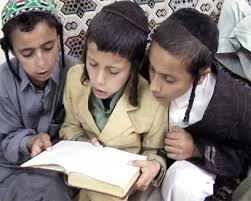
Yemen's Jews uneasy as Muslim hostility grows

KHARIF, Yemen – In this village in northern Yemen, where a kosher butcher slaughters chickens and the school bus carries young boys in side curls along a dirt track to their Hebrew studies, one of the oldest Jewish communities in the Arab world is fighting for its survival.

Yemen's Jews, here and elsewhere in the country, are thought to have roots dating back nearly 3,000 years to King Solomon. The community used to number 60,000 but shrank dramatically when most left for the newborn state of Israel.

Those remaining, variously estimated to number 250 to 400, are feeling new and sometimes violent pressure from Yemeni Muslims, lately inflamed by Israel's fierce offensive against Hamas militants in Gaza that cost over 1,000 Palestinian lives.

They face a Yemeni government that is ambivalent — publicly supportive but also lax in keeping its promises — in an Arab world where Islamic extremism and hostility to minorities are generally on the rise.

"There is hardly a mosque sermon that's free of bigotry. The government's own political rhetoric marginalizes the Jews, and civil society is too weak to protect them," says Mansour Hayel, a Muslim Yemeni and human rights activist who is an expert on Yemen's Jewry.

"The government's policies are to blame for the suffering of the Jews," he says.

The pressures have long existed. But an Associated Press reporter who traveled recently to the rarely visited north and interviewed Jews, Muslim tribal sheiks, rights activists and lawyers in Yemen's capital of San'a, heard complaints that the frequency of harassment — including a murder and the pelting of homes with rocks — has markedly increased.

The testimony was particularly striking because Jews in Arab lands often refrain from airing grievances, lest they antagonize the government and provoke Muslim militants.

Yemen's government says it is trying to stop the harassment. President Ali Abdullah Saleh has proposed that the 45 Jewish families in the farming communities of Kharif and the nearby town of Raydah in Omran province be moved 50 miles southeast to San'a, where they can be better protected. He has offered them free plots of land to build homes.

But the government has taken no concrete steps since presidential aides first spoke of the offer late last year. MORE HERE

Iranian ship with weapons sunk of Sudanese coast

An Iranian vessel laden with weapons bound for the Gaza Strip was torpedoed off the coast of Sudan last week, allegedly by Israeli or American forces operating in the area, the Egyptian newspaper El-Aosboa reported on Sunday. Anonymous sources in Khartoum told the newspaper that an unidentified warship bombed the Iranian vessel as it prepared to dock on Sudan before transferring its load for shipment to the Hamas-ruled Gaza Strip.

These sources said they suspects U.S. or Israeli involvement in the attack, but neither Washington nor Jerusalem have released a statement yet on the matter. The Israel Air Force, meanwhile, is suspected of attacking a convoy of Iranian arms that passed through Sudan en route to Gaza in January, according to reports released in March.

American officials confirmed the IAF involvement in that attack, The New York Times later reported, abd said they had received intelligence reports that an Iranian Revolutionary Guards operative had gone to Sudan to help organize the weapons convoy said the report.
MORE HERE IN HA'ARETZ

Morocco's autonomy proposal, 'very advanced' initiative for resolving Sahara issue, US Gov.

Morocco's proposal to grant autonomy to its southern provinces, The Sahara, is a "very advanced initiative" for resolving the Sahara issue, Governor of Virginia State, Executive Chairman of the US Democratic Party, Timothy M. Kaine, said.

In a statement to MAP upon his departure Saturday after a three-day official visit to Morocco, Kaine stressed that the initiative proposed by the Morocco is a "good basis for negotiations" on this issue. Kaine said he was "satisfied" with his talks with government, economic and human rights officials in Morocco. "We have learned so much about the reforms and the interesting development" witnessed by the north African kingdom, he added.

Referring to bilateral economic relations, the US official said the Free Trade Agreement between the two countries has increased the level of exchanges between the State of Virginia and Morocco, particularly in the agricultural sector.

Many opportunities remain to be explored in the field of new technologies, he said, adding that his visit to Morocco will also promote the development of relations between the ports of Casablanca and Virginia.

During his visit, Kaine had held talks with Prime Minister, Abbas El Fassi, Foreign Minister, Taieb Fassi Fihri, Interior Minister, Chakib Benmoussa, Minister of the Industry, Trade and New Technologies, Ahmed Reda Chami, Minister in charge of General and Economic Affairs, Nizar Baraka, and chairman of the Advisory Council on Human Rights (CCDH), Ahmed Herzenni. From Maghreb Arab Presse

Saturday, April 25, 2009

Saudi Arabia clamps down on loud mosques

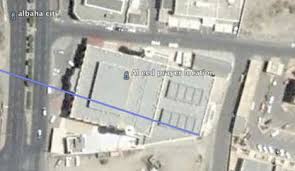
Saudi Arabia has started a campaign to crack down on mosques whose call to prayer is too loud. According to the Saudi news agency SPA, ministry inspectors have removed some 100 loudspeakers from dozens of mosques in the city of al-Bahah in western Saudi Arabia because they were so loud they smothered out the broadcasts of other mosques.

The call to prayer is a central part of life for Muslims. There are five each day. But many mosques put the imams' sermons on the public sound system as well. The ministry says some mosques have speakers that can be heard as much as five kilometres away. The result is that mosques in close proximity drown out each others' broadcast to the point that they are unintelligible even inside the mosques. Government inspectors are to travel throughout the country to tackle the noise nuisance
From RNW.

In Indonesia radical Islam has lost its support

From Pakistan to Gaza and Lebanon, militant Islamic movements have gained ground rapidly in recent years, fanning Western fears of a consolidation of radical Muslim governments. But here in the world’s most populous Muslim nation just the opposite is happening, with Islamic parties suffering a steep drop in popular support.

In parliamentary elections this month, voters punished Islamic parties that focused narrowly on religious issues, and even the parties’ best efforts to appeal to the country’s mainstream failed to sway the public.

The largest Islamic party, the Prosperous Justice Party, ran television commercials of young women without head scarves and distributed pamphlets in the colors of the country’s major secular parties. But the party fell far short of its goal of garnering 15 percent of the vote, squeezing out a gain of less than one percentage point over its 7.2 percent showing in 2004.
MORE in the NEW YORK TIMES.

And the UPI story

Friday, April 24, 2009

What law prevails in Egypt?

(Compass Direct News) – Christian convert Raheal Henen Mussa and her Coptic husband are hiding from police and her Muslim family for violating an article of Islamic law (sharia) that doesn’t exist in the Egyptian penal code.

Police arrested Mussa, 22, on April 13 for marrying Sarwat George Ryiad in a customary marriage (zawag al ‘urfi), an unregistered form of matrimony in Egypt made without witnesses. Mussa’s family took her from police custody on Sunday (April 19), but she escaped from them on Tuesday (April 21). She and her husband fled Cairo and are in hiding.

According to a strict interpretation of sharia, Muslim women are not permitted to marry non-Muslim men, although the opposite is allowed, and Article 2 of the Egyptian Constitution stipulates that sharia is the basis for legislation.

The two have not committed a crime according to Egyptian law since they didn’t seek official marriage status, but police and Mussa’s family are pursuing them because they violated Islamic law, advocacy groups say. “They have not violated the law, but the family and the police are applying their own unwritten law,” said Helmy Guirguis, president of the U.K. Coptic Association.

Lebanese 'confessed' that they wanted to bomb Egyptian Taba

Egyptian Assistant Foreign Minister for Arab Affairs Salaheddine Abdel-Rahman disclosed information to Arab ambassadors in Cairo on Friday on the investigation into the alleged Hizbullah cell suspected of carrying out operations in Egypt, Egyptian media said.

The Daily Star (Lebanon edition) reports that an Egyptian security official said Friday that strict instructions were issued to the country's Interior Ministry, specifically to seaport and airport officials in charge of checking Lebanese passports and identity cards.

Meanwhile, interrogation of the so-called Hizbullah cell has uncovered that the group was tasked with monitoring the Suez Canal, Egyptian media reports said. These reports did not explain how that interrogation was carried out, but we fear for the health of our citizens.

Press reports from Egypt on Friday said Hizbullah detainees belonging to a six-member "Port Said cell" have confessed that prime suspect Sami Shehab had assigned them to buy a boat to monitor the Canal. Again, we do not know how these detainees were invited to make these 'confessions'.

Egypt's Al-Akhbar newspaper identified them as Ayman Mustafa, Ihab Ahmad, Ihab Assayed, Ibrahim Issam, Mohammad Abdel-Fattah and Hasan al-Manakhli. MORE HERE


UAE's royal family involved in brute torture: on video...

A video recently smuggled out of the United Arab Emirates shows a member of the country’s royal family torturing a man so cruelly that the U.S. Secretary of State Hillary Clinton is now under pressure to investigate and take action. The footage, obtained by ABC News, shows Sheikh Issa bin Zayed al Nahyan, brother of the country’s crown prince, Sheikh Mohammed, stuffing sand down the man’s throat, shocking him with an electric cattle prod and, at one point, dousing the man’s testicles in lighter fluid and setting them aflame.

The victim—who is held down through much of the video by a man in police uniform—has been identified as Mohammed Shah Poor, who the Sheikh accused of short changing on a grain delivery to his royal ranch on the outskirts of Abu Dhabi. Near the end of the video the victim is shown being run over by the sheikh who is driving an SUV, the sound of bones cracking can be heard.

The UAE government has claimed the torture is not part of a patter involving Sheikh Issa, and that the matter is being settled privately: “By agreeing not to bring formal charges against each other, i.e., theft on the one hand and assault on the other hand,” a spokesman said. But in Washington, the co-chairman of the House Human Rights Commission, Rep. James McGovern, is demanding that Clinton temporarily stop any “funds, training, sales or transfers of equipment or technology, including nuclear” to the UAE until an investigation is completed.

From Macleans.ca

Religious Leaders in Algeria Are Demanding the Punishment of the Murtaddeen

On the daily Aafaq website a dispatch from Algiers dated 24 April, with this headline:
Religious Leaders in Algeria Are Demanding the Punishment of the Murtaddeen

An Algerian policeman and his daughter have made a public confession that they have embraced Christianity, and that he had divorced his wife because she refused to convert with them. His announcement has precipitated a tremendous amount of discussions and arguments in Algeria, causing the religious authorities to demand that the police department should dismiss him from his position since he should be considered as a Murtadd.

The policemen declared to the Algerian newspaper al-Nahar that his previous life as a Muslim was filled with anxieties and the absence of peace of mind. He added that the radical Islamist movements that have massacred women and children, caused him to become fearful of Islam which he considered responsible for the killings. His life was caught up in a deep struggle that eventually led him to embrace Christianity, which according to him, has given me peace of mind.

As to the daughter of the policeman, she declared that the reason she embraced Christianity was due to her feeling that Islam dealt with women as mere servants or concubines, to be sexually exploited by men. Muslim men regard a woman only from a physical point of view, while by embracing Christianity she began to feel that she had become a dignified human being. She looks at her decision as final, and does not regret it at all.

As to the religious authorities, their reaction was swift declaring that to commit Irtidad on Islam is Kufr, and should be punished by capital punishment, unless they repent and return to Islam.

It is estimated that there are around 10,000 Christians most of them live in the Kabyle district of Tizi Ouzou. Some unofficial sources claim that the number of Christians in Algeria is more than 100,000; they are to be found all over the country, especially in the west of Algeria around Oran and Mostaganem, most of the converts are young men and women. They declared that the reason that prompted them to embrace Christianity was that Islam is responsible for the killings, terror, and rape, as perpetrated by the Islamist groups which had declared in 1992 their Jihad against civilians in order to get closer to Allah!

Thursday, April 23, 2009

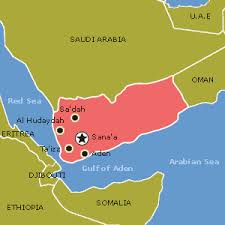
Is Yemen the next Afghanistan?

It depends on who you ask.

Princeton University Ph.D. candidate Gregory Johnsen, a former Fulbright Fellow in Yemen, told Huffington Post that while he doesn't think Yemen will supplant the Afghanistan-Pakistan border region as the most important front in the war against Al Qaeda, he does believe Yemen has become "a significant front" now that the Al Qaeda organization has gone from a local chapter to a regional franchise.

Johnsen, who blogs about Yemen at www.islamandinsurgencyinyemen.blogspot.com, warned that Yemen's economy is getting weaker by the day. "And as less and less money comes in, the government is less able to control the state, primarily because deals made in the past were dependent upon having enough money to buy off domestic opponents. If Yemen becomes a failed state, it will open up a great deal of space for terrorist groups and individuals to move in."

This possibility concerns the U.S. for many reasons, including the fact that Yemen shares a border with Saudi Arabia, and Yemen controls the narrow Bab-el-Mandeb Strait -- a checkpoint through which 3.3 million barrels of oil are shipped every day.

"Information on Yemen is hard to get, so people will project all kinds of fears," cautioned Charles Schmitz, an associate professor at Towson University. Schmitz told Huffington Post that one of the big misunderstandings is that somehow Yemen is going to become what Afghanistan was prior to 2001 -- a base from which international enemies of the U.S. can operate. "In my opinion Al Qaeda is an irritant, but they are no more than an irritant," said Schmitz. "The Yemeni government has enough control to knock out a permanent Al Qaeda training camp."

For this whole article in The Huffinton Post, see HERE.

Sunni-Shiite tensions flare in Egypt-Hizbollah dispute

Foreign Policy Digest carries a helpful article on what is happening in Egypt; why do our brothers there make such a fuss about Hizbollah, our Lebanese shiite party?

Abdel-Magid Mohammed has had a busy two weeks. On April 8th, Mohammed, who is Egypt’s public prosecutor, announced he and his staff were interrogating fifty operatives detained on Egyptian soil for allegedly spying for Hizbullah and conspiring to destabilize the Egyptian state. As details of the operatives’ intent emerged, and the number charged with spying for Hizbullah narrowed from fifty to nine, the flames of political discord between Arab powers were fanned. Though the arrests occurred months before, their public revelation now has heightened tensions between Shiite Hizbullah, its patron Shiite state Iran, and Sunni Egypt.

The whole article HERE

Arab racism against darker skinned Muslims

Tarek Fatah spoke at the Durban II conference about the racism he detects in Arab society. A quote from his valuable speech:
The mistreatment of Black Muslims by those who feel they are superior because of their lighter skin colour has been historical. Only in the Middle East can one get away by addressing a Black man as “Ya Abdi”, which translates to the horrible words, “Oh you slave”.
HERE the whole story.

Somali piracy and Islam are linked together

In the Wall Street Journal, Stephen Prothero argues, in his article Muhammad on the High Seas, that the piracy problem around Somalia is directly related to Islam.
The late spate of piracy off the coast of Somalia has been analyzed so far almost entirely in political and economic terms: Somalia is lawless and impoverished, so Somali men are taking world trade for a ride. Religion comes up in this analysis only in terms of fears about potential ties between Somali pirates and Islamist groups such as al Qaeda and al Shabab.

But according to Boston University's World Religion Database, the Somali population is 99% Muslim, and the last time the U.S. was menaced by piracy, in the late 18th century, the so-called Barbary pirates of north Africa also operated out of Muslim havens. For those who know something about Muhammad and the origins of Islam, more than coincidence is at work: Religion, it turns out, should be factored into the piracy problem.

For the whole article, see HERE.

Algeria recognized 22 churches

Twenty-two Christian churches closed by Algerian authorities last year have reopened. According to a report in the Algerian daily, Ech-Chourouk citing an American Christian group called Open Doors, the protestant churches were among 26 churches shut down in 2006 because they were considered outside a law governing religious practice.

Based on the newspaper report published on Thursday, it seems that the 22 churches have obtained the permits required by Algerian authorities for Christian worship.

In recent months many politicians and Muslim religious leaders have criticised the activities of Christian missionaries in Algeria, stressing the opening of new evangelical churches, particularly in the area of Cabilia.

Several French and American religious groups have recently been accused of pressing Algerians to convert to Christianity in exchange for help to emigrate elsewhere. See HERE

53 years in Syria - Henry Jessup

A great book has been made available online - 53 years in Syria, by Henry Jessup. He was a missionary in Beirut from 1856-1910. His book is an important source for the mission history of Lebanon. Thanks, Rev Bassam Madany, for letting us know!

Wednesday, April 22, 2009

Islam, Virgins and Grapes

In an article titled Islam, virgins and grapes, Nicholas D. Kristof (photo) writes in the New York Times about a conference in Notre Dame about the interpretation of the Koran. Good reading, as it shows how even in Islam, new manners of understanding the Koran begin to be discussed.

In Afghanistan, 300 brave women marched to demand a measure of equal rights, defying a furious mob of about 1,000 people who spat, threw stones and called the women “whores.” The marchers asserted that a woman should not need her husband’s consent to go to school or work outside the home.

In Pakistan, the Taliban flogged a teenage girl in front of a crowd, as two men held her face down in the dirt. A video shows the girl, whose “crime” may have been to go out of her house alone, crying piteously that she will never break the rules again.

Muslim fundamentalists damage Islam far more than any number of Danish cartoonists ever could, for it’s inevitably the extremists who capture the world’s attention. But there is the beginning of an intellectual reform movement in the Islamic world, and one window into this awakening was an international conference this week at the University of Notre Dame on the latest scholarship about the Koran. Read the whole article HERE

Beirut named World Book Capital City 2009 by UNESCO

As Beirut prepares to don the mantle of UNESCO "World Book Capital City 2009," Arabic novels are enjoying an unprecedented boom across the Middle East, breaking taboos on topics such as sex and religion.

The Lebanese capital was chosen as the world's literary centre this year "in the light of its focus on cultural diversity, dialogue and tolerance," according to the UNESCO selection committee.

There is no shortage of literary fodder as book readings and launches are scheduled across Beirut daily for the last week of April. Among books being showcased will be a wealth of latest offerings from leading authors.

"More than 100 novels were up for the International Prize for Arabic Fiction (the Arab version of the Booker Prize) in 2008/09 -- and that's an unprecedented number," said Fakhri Salih, a former jury member for the award and current chairman of Jordan's association of literary critics.

The prize was awarded to Egyptian author Yussef Zeidan for his book "Azazil," which centres on changes in religion in Arab countries around the Mediterranean in the fifth century AD. MORE OF THIS AFP story HERE.

Lebanese elections in June for sale

It is election season in Lebanon, and Hussein H., a jobless 24-year-old from south Beirut, is looking forward to selling his vote to the highest bidder. “Whoever pays the most will get my vote,” he said. “I won’t accept less than $800.”

He may get more. The parliamentary elections here in June are shaping up to be among the most expensive ever held anywhere, with hundreds of millions of dollars streaming into this small country from around the globe.

Lebanon has long been seen as a battleground for regional influence, and now, with no more foreign armies on the ground, Saudi Arabia and other countries in the region are arming their allies here with campaign money in place of weapons. The result is a race that is widely seen as the freest and most competitive to be held here in decades, with a record number of candidates taking part. But it may also be the most corrupt. More in the NEW YORK TIMES

Mubarak cries wolf! The latest conspiracy theories of Mubarak and Ahmedinajad

Once again, Mubarak’s state media is crying wolf. This time it is claiming another big conspiracy theory against, not only Egypt, but the whole Arab and Islamic worlds.

Mubarak’s media claims that Egyptian security had busted a net of spies- first claiming to work for Hezbollah, and then now claiming an Iranian connection. According to Mubarak’s media, Iran plans to convert, not only Arabs, but Muslims, or perhaps the whole world, into Shiism.

There is no doubt that those spies were working for Hezbollah and they admitted that they were trying to smuggle weapons to Hamas- which should be stopped by all means. Egyptian borders should not be used to smuggle weapons through tunnels in Rafah to Hamas’ terror masters who hide in schools and mosques and shoot rockets on civilians in Israel.

But the latest cry of the Mubarak regime follows a pattern of weaving and spreading conspiracy theories beyond reason; first against the Americans, then the Israelis, and now Iran.There is no doubt that the Mullas in Tehran have been playing a subversive role towards U.S. interests in the whole region and they have been pumping lots of cash into Hezbollah and Hamas, Afghanistan, and especially in Iraq. They are the spoilers of the whole Middle Eastern politics. But the fact is both Mubarak and Ahmedinajad are two sides of the same coin. They know how to play their international and local audience, and especially the gullible Arab and Muslim masses who buy into those conspiracy theories.

Dictators do that to deflect their people’s attention from nagging domestic issues such as poverty, failing economies, grave human rights abuses, unemployment, etc.

It is very tragic that a demagogue like Ahmedinajad, after delivering his despicable speech at the U.N. on the eve of the Holocaust remembrance, would be depicted as a hero in Tehran!But Mubarak does the same. On one hand, he is presenting himself to his allies as a partner in the War on Terror.

On the other hand, Mubarak presents himself to Egyptians and Arabs as their only savior of them from those imperialist American and Zionist designs. That’s of course after cashing $2.5 billion of American taxpayers money every year that he has been receiving in foreign aid since 1981. Well, try another trick Mr. Mubarak.

Aladdin Elaasar is a columnist and lecturer. He wrote “The Last Pharaoh: Mubarak and the Uncertain Future of Egypt in the Volatile Mid East”. Elaasar has been a frequent commentator on Middle Eastern affairs on several local American TV and Radio networks and media and cultural consultant since 1992. Email:omaraladin@aol.com

Pope must apologize before coming to Jordan? Yeahhh

Jordan's powerful Muslim Brotherhood on Tuesday demanded Pope Benedict XVI apologize ahead of his Mideast tour for his previous remarks about the Prophet Muhammad that many Muslims interpreted as insulting their faith.

They must be dreaming. When was the last time the Brotherhood apologized for statements by leaders of his organization that Christians consider an insult? Let Muslims 'clear the air' and stop their blasphemy against Jesus Christ, the son of God.

The controversy centers on a speech the pope made in September 2006 about Islam and violence in which he quoted a Medieval text that characterized some of the teachings of Muhammad as "evil and inhuman," particularly "his command to spread by the sword the faith."

"The pope insulted Islam and deeply hurt our feelings back in 2006 and he must apologize now to clear the air with Muslims worldwide," said Brotherhood spokesman Jamil Abu-Bakr. "We expect a written or verbal apology now or right before he visits Jordan."

More on this, HERE

Brief history of the Syriac-Orthodox Church

The Syrians are the Arameans themselves, the inhabitants of the Fertile Crescent region (Syria, Lebanon, Jordan, Palestine, Iraq, and Southeastern Turkey). They came from the Syrian desert in the 14th century B.C, and settled in the urban centers founding many kingdoms. The strongest of these Aramean kingdoms were the kingdoms of Damascus, Nahreen (Mesopotamia), Sobah and Padan-Aram. They imposed their language on the whole region and became the masters of the land for about 5 consecutive centuries. Their sovereignty ended in 732 B.C. with the fall of Damascus in the hands of the Assyrians. Even though their political sovereignty vanished, they continued to constitute the majority among the population of the region, playing a major role in the events. More HERE

Mahmoud Ahmadinejad's speech received mixed reaction by Arabs

THE Iranian President's inflammatory speech to a United Nations conference in Geneva attracted positive reactions in the Palestinian media, but the Saudi media ridiculed Ahmadinejad.

Al-Quds, the Palestinian Arabic newspaper published in Jerusalem, led yesterday's issue with its coverage of Mahmoud Ahmadinejad's speech. "European and Western countries withdrew from the session during the speech of Iranian President as soon as he mentioned Palestine and criticised the establishment of the state of Israel," it said.

Al-Ayyam, published in the large West Bank city of Ramallah, devoted its front page to the walk-out staged by several European nations. It cast the Ahmadinejad speech as criticism of the way Israel treated Palestinians.

A leading Arabic newspaper published in London and widely read across the Palestinian territories, al-Quds al-Arabi, said the Iranian President had only spoken the truth. MORE HERE

The Saudi press, often reflective of its government line, on Tuesday reacted with mockery to the speech of Iranian president Mahmoud Ahmadinejad in which he equated Israel to a “racist government”.

The press has largely focused on the outcry that the Iranian president has once again provoked in the West, at a time when the relations between Saudi Arabia and Iran are at an impasse.

In no position to lecture

“Has Iran sacrificed one date palm for Palestine? Has Tehran lost one single man in the battlefield during the six wars against Israel?” ironically asks Tareq Al-Homayed, editor in chief of top selling newspaper, Sharq Al-Awsat.

On its part, the newspaper Al-Madina believes that the Iranian president was not the person best qualified to denounce “Israel’s racism”.

“The Iranian president has rightly accused Israel of racism. But Ahmadinejad is not well placed to say it”, declares its editorial. “Israel, admittedly, is a racist and aggressor (State). It daily attacks our land and our people in Palestine and in the Golan. But it is also true that Iran has occupied Arab islands and has over the last 38 years persisted in keeping them under its own domination”, the newspaper adds.MORE HERE.

Monday, April 20, 2009

Egypt lashes out at Arab 'axis of evil'

Egypt has launched a major information offensive against a number of Islamic countries and movements based on information provided by captured Hezbollah operatives. These include Iran, Hezbollah, Syria, Qatar and Hamas.

The official Egyptian government daily newspaper, al-Ahram, devoted its main front-page headline Saturday to an unprecedented attack against the leaders of Iran, Syria, Qatar, Hezbollah, the Muslim Brotherhood movement in Egypt, Hamas, as well as the Qatari-owned Al-Jazeera television network and Hezbollah’s al-Manar television.

Al-Ahram accused those countries and organizations, which have been dubbed by Egyptian commentators as the “Axis of Evil,” of collaboration with the “plot” to topple Egyptian President Hosni Mubarak’s regime from power by means of terror attacks inside Egypt. Rest of this story HERE

Water crisis in Palestine


A World Bank report blames Palestinian mismanagement and Israeli restrictions for severe

water shortages in Palestinian areas.Palestinians get only a quarter of the water Israelis have access to.The existing problems effect not just daily supply but the development of water resources, water uses and wastewater management."Water related humanitarian crisis are in fact chronic in Gaza and parts of the West Bank," says the report.For their water Palestinians in the West Bank and the Gaza Strip are completely depended on scarce resources controlled by Israel.This has led to "systematic and severe constraints on Palestinian development of water resources", says the report.

What a moral example.... CIA has been torturing its prisoners


Arab governments do not have to take Western criticism regarding torture in their prisons very seriously; the New York Times today describes how the USA has been using torture on its prisoners. And those who used these methods will not go punished, Barack Obama decided.
C.I.A. interrogators used waterboarding, the near-drowning technique that top Obama administration officials have described as illegal torture, 266 times on two key prisoners from Al Qaeda, far more than had been previously reported.

The C.I.A. officers used waterboarding at least 83 times in August 2002 against Abu Zubaydah, according to a 2005 Justice Department legal memorandum. Abu Zubaydah has been described as a Qaeda operative.
More in the New York Times.

What the prophet Muhammad did in the night

If you are interested to know about the sleeping habits of the prophet of Islam, this may be an interesting lecture for you. See HERE

Sunday, April 19, 2009

Hamas cleric: Jews are called for extermination

A Muslim cleric called this month for the extermination of the Jews in a Friday sermon broadcast on Hamas TV, according to Middle East media watchdog, the Palestinian Media Watch (PMW). Barely three years ago, Ziad Abu Al-Haj participated in an international conference of “Imams and Rabbis for Peace”, where he and others vowed to “condemn any negative representation” of each others’ religion.

Three weeks ago, however, the religious leader told his viewers on Al Aqsa (Hamas) TV that “Hatred for Muhammad and Islam is in their [Jews’] souls; they are naturally disposed to it…” According to the Hamas interpretation of Islam, Jews are inherently evil and therefore are a threat to Muslims and all humanity. More: see HERE

Barack Obama's provocative approach to Islam

Barack Obama does anything but conjure up the specter of a clash of civilizations. In his visit to Turkey two weeks ago the American president continued his efforts to engage the Muslim world, declaring in his speech to the Turkish parliament that "the United States is not at war with Islam," and professing America's "deep appreciation of the Islamic faith." Yet his message to the Islamic world is far more provocative for Islamic radicals than is properly appreciated by Western audiences hoping for reconciliation with Islam. Indeed, Obama's vision represents a departure from the West's own perspective on Islam in a sense that has so far escaped attention.
Thus writes Halil M. Karaveli in the Jerusalem Post. He argues that Obama's focus is on strengthening the secularist trends in the Muslim world. The whole article can be read HERE.

Saturday, April 18, 2009

Celebrating Miracle of Holy Fire Behind the Wall

It was an amazing and extraordinary day in Ramallah and then in Taybeh receiving the Holy Fire following the miracle at Christ’s Holy Life-Giving Tomb in Jerusalem on this Great and Holy Saturday afternoon. I decided not to argue with the soldiers and the policemen in Jerusalem like last year where my husband David and I could not get anywhere near the Holy Sepulchre. Also, I decided to take the advise of the Greek monk during my first time to witness the Miracle of the Holy Fire (2002) when he kicked me out of the front row near the Life-Giving-Tomb and said in Greek: “My child it is not only with the eyes that we see.” I think he desperately needed the space for the Greek Consul and Greek dignitaries that attend this special miracle but his wise words never left my thoughts.

More on this story by Maria C. Khoury, Ed. D. here

Somalia adopts sharia as national law

Somalia's parliament has unanimously endorsed the Sharia Law to be ruled with the country, deputy speaker said on Saturday. Parliamentarians say they hope the vote Saturday will help drain support from Islamist insurgents fighting against the new government. Implementation of the Islamic Sharia has been one of their key demands.

The deputy speaker of the Somali parliament Osman Elmi Boqore, said 343 parliamentarians attended the meeting and they all voted for the Sharia enforcement. "343 parliamentarians attended in the meeting and they have unanimously endorsed the proposal. No one has rejected or abstained the voting for the proposal of the Islamic law and Somalia has an Islamic government now," said Osman Elmi Boqore, who chaired Saturday's meeting.

Members from the Somali Islamic clerics and clan elders were present in the meeting. The cabinet ministers of the Somali government had previously approved implementation the Islamic Law.

More on this website.

Petition to shut down website insulting Muhammad

For your information, we received an email, calling people to sign a petition against a website. This is what it said:   

To All Muslims and those who respect Prophet Muhammad PBUH
This website (http://www.prophetmohammed.co.uk/)  is a sequel to the danish caricature stunt aimed at insulting our beloved Prophet Muhammad PBUH. 

To sign this petition please visit http://www.petitiononline.com/25152130/petition.html  


Where is the Muslim Brotherhood heading?


Jack Shenker in the Guardian wrote an insightful article in the Muslim Brotherhood of Egypt, and where it is heading.  Very good to read for those of you in Egypt, or interested in Egypt:

There are several recurring themes one becomes wearily familiar with when following the erratic world of Egyptian politics. Sensational revelations about Zionist/Iranian plots to destabilise the nation are a permanent fixture, as are empty policy statements parroted by government spokesmen and stoic silence from the regime on any issue that actually matters. One thing you don't often hear about, though, is resignation speeches – it takes a lifetime's work acquiring wasta(connections, or influence) to ascend to the top of any of the country's numerous greasy poles, and once politicians are up there they tend to be remarkably unenthusiastic about climbing back down. MORE HERE

Friday, April 17, 2009

Look Who’s Talking in the Arab World

After the US’s useless attempts with Al Hurra, France’s France 24, Britain’s BBC Arabic, Iran’s Al Alam, Germany’s Deutsche Welle Arabia and Russia’s Rusiya Al Youm have joined the race to conquer Arabic speakers, with negligible results. For the time being, Arabs seem settled with their local providers, but an interesting development could see more ventures into foreign lands.

With the slow but steady progress of Al Jazeera English, there is clearly room and indeed urgent need for Arab perspectives to cross borders and to be communicated directly without the selective and destructive translations of MEMRI-style Zionist outlets.

Read this article on the role of Arab media bt Rime Allaf HERE

Egypt's Campaign against Iran Sends Washington a Signal

David Pollock and Mohammad Yaghi wrote an article for the Washington Institute for Near East Policy about Egypt's renewed anti-Iran policies:

In the last week, Egypt has moved against Iran and its allies in the Arab world. Cairo arrested a Hizballah cell that was preparing terrorist operations on Egyptian soil, organized a campaign against Hamas weapons and money smugglers in the Sinai Peninsula, and stepped up efforts to displace Qatar -- an Iranian sympathizer -- as a mediator on Sudan, Lebanon, and other inter-Arab issues. It remains to be seen whether this policy shift will become a sustained part of a grand strategy to restore Egypt's leadership among Arab states or, instead, a more-defensive approach designed to parry previous humiliations from Iran's allies. It is apparent, however, that Cairo is sending a signal to Washington that the "nuclear file" is not the only -- or even the most urgent -- aspect of the Iranian threat.

Here the whole article

Thursday, April 16, 2009

Documentary Film on the First Martyrs of the Turkish Church

MALATYA FILM RELEASE
Documentary Film on the First Martyrs of the Turkish Church DVD Release


April 18, 2007, two Turkish Christians and a German missionary were tortured and killed inside a Bible Publishing house in Malatya, Turkey. Summer 2008, two young filmmakers from Texas set out to create Malatya, a documentary exploring how three Christian martyrs have shaken the nation’s roots.

Necati Aydin, UÄŸur Yuksel and Tilmann Geske were tied up, tortured with butcher knives and killed for worshiping Christ. Semse Aydin and Susanne Geske, the wives of Necati and Tilmann, both contributed to the film. Echoing Christ’s words from the cross, they’ve publicly forgiven those guilty of their husbands’ deaths. Resources for Christian counseling are scarce in Turkey, a country of nearly 72 million, 99.8 percent of which is Muslim. This has left their surviving families and friends with little human support to lean on in a nationwide church of around 3,000 believers. The joy they find is purely in the hope of their sovereign God working through this time of trial for His glory and their good.

Testimony from leaders of the Turkish church shows even before the martyrdom, Turkish Christians faced persecution. They were unlawfully jailed, interrogated about their activities and even tortured. The deaths of these men have crossed a new line.
Attacks and attempted murders have increased since the Malatya martyrdom. The current leader of the Turkish Protestant Alliance, Zekai Tanyar, told the filmmakers, "Before this, I would have said that we do suffer, but I wouldn't call the Turkish Church 'the Persecuted Church,' but all of a sudden, we are the persecuted church."

Turkish pastors revealed to the filmmakers the rise in persecution following the martyrdom has led many in the church to quit attending their fellowships or fall away from their faith all together. Others however have grown bolder in ministry, both in the sharing of their faith and serving in their churches, fully aware any church could be the next victim of violence.

Malatya also covers how the ongoing trial against the murder suspects has gained nationwide coverage in Turkey, where religious freedom is established by law. While some Turks think any Christian in Turkey must be a foreigner, and likely a subversive, thus championing the martyrdom in the name of patriotism, others despise the martyrdom as a hate crime. Turks now face a cultural dilemma: for the first since the founding of their republic, Turkish Christians were martyred.

Malatya
is scheduled for DVD release across the globe April 18, 2009, the two-year anniversary of the martyrdom. Screenings are scheduled from Austin to Brazil, the UK, Germany, South Africa, Australia and more.

To view the trailer and get more info on Malatya, please visit www.malatyafilm.com. If you'd like to set up an interview with the executive producer or the filmmakers, please email promote@malatyafilm.com.

Pray for Maher and his daughter

Message from Middle East Concern:

On 2nd April we asked for prayer for Maher, a believer from a Muslim background (BMB), and his daughter. Maher is involved in a legal battle to officially change his religious registration from Islam to Christianity so that both he and his daughter may be identified as Christians.

Maher made a short statement at a hearing held on 4th April. The judge requested a formal certificate issued by the Coptic Orthodox Church accepting Maher as having become a Christian, despite the fact that such a certificate, previously issued by the Church of Cyprus, had already been submitted to the court.

The Coptic Church issued this certificate, the first time it has ever done so to a BMB. It was presented to court officials on 11th April. Maher's lawyers do not yet know whether the certificate will meet the judge's requirements.

The next hearing is scheduled for 2nd May.

The issuing of such a certificate is controversial. There have already been threats issued against the church leaders responsible. Previously, church leaders have declined to issue such certificates for fear of a backlash from the authorities (through discrimination in official processes, e.g. passport applications and permits for property maintenance work) or society (through mob violence against church property or Christian communities).

Egyptian Christians request our prayers that:
a. Maher and his daughter will know the presence and peace of Jesus each day
b. All parties involved will act with integrity
c. Maher's legal team will know God's wisdom and enabling
d. The case will be successful, allowing them to have their identity cards changed and setting a precedent for other BMBs
e. Coptic churches will be protected from any backlash
f. All officials involved will be exposed to the claims of Jesus and be drawn to His offer of love and life.

Ongoing problems between Algeria and Morocco

If it were up to official Moroccan and Algerian media outlets, it would be years before the two countries inked a viable agreement about how to handle a longstanding border dispute in the Western Sahara.

Critics on both sides of the border say official media has been battling over the legitimacy of the Western Sahara since Morocco annexed the territory after former colonial power Spain left in the 1970's.

Algeria has suggested letting the independence-minded Polisario movement vote for its own independence, while Morocco has offered the inhabitants in the Western Sahara a form of autonomy under Moroccan rule.

Relations between the two countries have been at a standstill on the issue since 1994, when gunmen killed 2 Spanish tourists at a hotel in Marrakech, something Morocco blames Algeria for - charges the Algerian government flatly denies.

And the typical news coverage between the countries resembles the back and forth of a tennis match:

More on this tennis match on Daily Maghreb

Wednesday, April 15, 2009

Church growth in Qatar

In the paved open area surrounding Our Lady of the Rosary, Qatar’s first Catholic church, Arabic, English and Tagalog are all regularly spoken.

Arabs, Filipinos, Indians and Europeans converge on the church, one of several in a growing compound on the outskirts of Qatar’s capital city. Since it opened a year ago, the church, with its striking stained-glass windows and seating capacity of about 2,500, has seen congregations double in size.

“It’s nice to practise your own religion in a foreign land,” said Michael Ajero, a 34-year-old Filipino bank employee who attends the church.

“It’s a matter of pride and it means we can share with our Islamic brothers the practices and what we do as Catholics.”

Father Tomasito Veneracion, the priest of the parish of Our Lady of the Rosary, said there had been objections to the opening of the church and the development of the larger Christian compound. “It was not people coming here, but more intellectual arguments in the Arabic newspapers,” he said.

More on The National from the UAE

Tuesday, April 14, 2009

Demonstrations in Khartum for Darfur rebels

A crowd of angry demonstrators burned shops and cars in a local market in south Khartoum, residents said on Tuesday, a day after nine Darfuri men were executed for the killing of a newspaper editor.

Some 5,000 people turned out under a heavy police presence to attend the funerals of the nine men, found guilty of killing Mohamed Taha Mohamed Ahmed in September 2006.

Some in the crowd chanted slogans in support of the Sudan Liberation Movement, a Darfur rebel group which has been fighting the government in the western region of Darfur.

Local radio, citing witnesses and security sources, reported that relatives of the executed men had clashed with police in two places.

Witnesses said a small number of demonstrators destroyed and damaged shops and cars on the way to the funerals.

At the men's trial, the lead police investigator said the defendants had been infuriated by an article in Ahmed's newspaper, al-Wifaq. A defence lawyer said the article played down reports about rape in Darfur and used unflattering language to describe Darfuri women.

The newspaper had also angered Islamists with articles about the Prophet Mohammad and had criticised the ruling National Congress Party of President Omar Hassan al-Bashir.

The human rights group Amnesty International condemned the executions, saying the men were tortured to extract confessions.

"The execution of the nine men is outrageous. They were arbitrarily arrested, tortured and then subjected to an unfair trial," said Tawanda Hondora, Amnesty's Africa Deputy Director.

The government, viewing the killing of the editor and the trial as sensitive matters, initially restricted reporting of the case to state media.

Saudi Arabia releases convert to the Christian faith

On 2nd February we requested prayer for Hamoud Bin Saleh, a Saudi national, arrested on 13th January after writing in his blog about his decision to follow Jesus. Hamoud also criticised the judicial system in his country.

We are pleased to report that he was released on 28th March. He has been banned from travelling outside Saudi Arabia or appearing in media. Nevertheless additional entries have since appeared in his blog.

Following Hamound's arrest, the Saudi authorities blocked access to his blog inside Saudi Arabia. Google then locked the blog, for what they claimed was a technical violation of their terms of service, before restoring it on 5th February 2009 following public pressure.

The relative leniency of the Saudi authorities in this case has surprised some Christians. Although there have been tentative moves towards reform, Saudi Arabia remains a country where political expression is overtly restricted and only one closely defined version of Sunni Islam is allowed to be publicly practised. Other forms of Islam and all other faiths are severely restricted. Officially, the death penalty for apostasy (i.e. leaving Islam) remains in force. Although there are no known examples of this sentence having being carried out in recent years, extra-judicial killings of those who choose to follow Jesus do occur. For example, it was reported in August 2008 that a Saudi man had killed his daughter because she chose to follow Jesus.

Christians in Saudi Arabia request our continued prayers that:
a. Hamoud will know the peace and presence of Jesus each day
b. The authorities will continue to act leniently towards Hamoud
c. That he will know the Spirit's guidance in all his actions, especially those related to the restrictions placed upon him
d. Those who have read Hamoud's blog would make a similar decision to follow Jesus
e. The reform process will continue, and will lead to greater freedom for Christians to express their faith in Jesus as Saviour and Lord

(c) Middle East Concern

Revival of the Aramaic language of Jesus with help of Syria

Syrian President Assad has set up an institute to revive interest in the language of Christ.

Ilyana Barqil wears skinny jeans, boots and a fur-lined jacket, handy for keeping out the cold in the Qalamoun mountains north of Damascus. She likes TV quiz shows and American films and enjoys swimming. But this thoroughly modern Syrian teenager is also learning Aramaic, the language spoken by Jesus.

Ilyana, 15, is part of an extraordinary effort to preserve and revive the world's oldest living tongue, still close to what it probably sounded like in Galilee, now in Israel, on the brink of the Christian era.

"In Nazareth when Jesus was born they spoke more or less the same language as we do in Maaloula today," said teacher Imad Reihan, one of the pillars of this picturesque village's Aramaic Language Academy, where Barqil is studying.

"Eli, Eli, lama sabachtani" ("My God, my God, why hast thou forsaken me") – Christ's lament on the cross – was famously uttered in Aramaic.

For the rest of this article, see www.guardian.co.uk

Monday, April 13, 2009

SUDAN: converts from Islam have a tough life

When Halima Bubkier of Sinar town converted from Islam to Christianity last year, initially her husband accepted it without qualms.

“After watching the ‘Jesus Film,’ I felt I needed a change in my hopeless and meaningless life,” the 35-year-old mother of three told Compass. “I lived a life of alcoholism and lacked self control, hence tried Christianity and it worked well for me. I shared this experience with my husband, and he was quite positive about it and allowed me to attend church services.”

News of her conversion spread quickly, she said, and last Sept. 14 she came face to face with Islamic hardliners who felt her conversion to Christianity was an act of betrayal. A few weeks later, during the daily fasts and nightly feasts of Ramadan in Sinar, near Khartoum, the Islamists blocked her husband from the communal meals because of her change in faith.

Rest of this story on Compass Direct News

Egypt's Coptic Orthodox Church has for the first time issued a certificate of conversion to a Muslim-born Christian

The Coptic-Orthodox Church in Egypt is for the first time formally recognizing that it is involved in converting Muslims. Egypt's Church has for the first time issued a certificate of conversion to a Muslim-born Christian, his lawyer said, in a country where religious conversion is highly sensitive.

Maher Al-Gohari, who is seeking to change his religion on his official documents from Muslim to Christian, was asked by a court to provide a conversion certificate from the Egyptian church. "He handed it in today," Nabil Gabriel told AFP. "It is the first time the church provides this sort of certificate."

In Egypt, citizens are required to carry their personal ID cards at all times. Without an ID card, one has no access to basic services.

It is only the second time that such a request has been formally made in a country where converting to Christianity, while not illegal, is practically impossible. Last year, a court rejected a request by a Christian convert from Islam, Mohamed Hegazy, to have his new religion written on his identity card.

Highlighting the sensitivity of the topic, the church would not comment on Gohari's case specifically. "In general, the church cannot turn away anyone who reaches out to it, otherwise it would be abandoning one of its roles as a church."


Sunday, April 12, 2009

Saudi Arabia bans 'illegal' TV decoders

Saudi Arabia is planning to ban 'illegal' Pay TV decoder boxes from use within the kingdom, which will include them being imported into the country. Government officials said the move will reduce piracy in Saudi Arabia and protect intellectual property rights, as consumers will only be allowed to use sanctioned services and products such as Showtime and its equipment. HE Abdul Rahman Al Hazzaa, Undersecretary at the Ministry of Culture and Information, said: 'The Kingdom is taking a strong stance against piracy because it compromises religious values, weakens the economy, tarnishes the country's image and hurts consumers.'

Saturday, April 11, 2009

Saudi judge upholds marriage of man to 8-year old girl

latest on 30 April 2008: The eight-year-old Saudi girl who was sold into marriage by her father has been given a divorce after an international outcry over the case, Saudi media reported Thursday.

The marriage of the girl to a man reportedly in his 50s was annulled Wednesday in out-of-court settlement overseen by a new judge in the city of Onaiza, after the original judge in the case refused to bend to pressure to grant the divorce, several newspapers reported.

Riyadh newspaper said the settlement was reached after the intervention in the case by an unidentified "important personality."

This was the initial news:

A Saudi mother is expected to appeal a judge's ruling after he once again refused to let her 8-year-old daughter divorce a 47-year-old man, a relative said.

Sheikh Habib Al-Habib made the ruling Saturday in the Saudi city of Onaiza. Late last year, he rejected a petition to annul the marriage.

The case, which has drawn criticism from local and international rights groups, came to light in December when Al-Habib declined to annul the marriage on a legal technicality. His dismissal of the mother's petition sparked outrage and made headlines around the world.

More HERE

Northern Iraq awaits bloodshed after US army pullout

One word: "Blood."

That’s how Abu Ahmed, a Kurdish father of six, envisions the future in this ethnically diverse northern province after U.S. troops are gone and allegiances older than Iraq’s new government take hold.

He said this with no drama, and some regret. Ahmed said he sometimes gathers with his Arab and Turkmen friends to reminisce about good times in the past. "We went out together, smoked together, drank together," he said. But how ethnic tensions here will influence this oil-rich province’s future is now on the minds of many.

Six years into the Iraq war, more questions than answers remain.

There’s the oft-delayed referendum on the province’s future status as a semi-autonomous region, or one tied to the Kurdish Regional Government to the north, or Baghdad to the south.

There’s the scheduling of elections and power-sharing agreements between the different Kurdish, Arab, Christian and Turkmen populaces.

And attached to all that is the question of just who should be counted as a provincial resident in the wake of an influx of Kurds after 2003.

Read further on Stars and Stripes.

Dubai: development thanks to semi-slave labor

Johann Hari, a writer for The Independent in the UK, writes a harsh critique of Dubai and its economic development that is almost slave-driven. Dubai was meant to be a Middle-Eastern Shangri-La, a glittering monument to Arab enterprise and western capitalism. But as hard times arrive in the city state that rose from the desert sands, an uglier story is emerging. Johann Hari reports. HERE the story.

Islamic Finance slowing down

John Irish of Reuters writes that Islamic Finance worldwide is not doing well, as a result of the general economic crisis. Here the whole story, and here an intro:

Islamic finance is slowing as the global financial crisis hits its hubs in Malaysia and the Gulf, but the sector now has a chance to move on to Western economies seeking to boost their financial centers. Regulatory differences still plague efforts to build cross-border Islamic banking, and harmonization among different schools of thought is one of the nascent industry's main obstacles as it looks to grow in European countries with large Muslim communities.

"There is a need for petrodollars in the West so more countries will be pandering to the rhetoric of Islamic finance to try to recycle petrodollars to their own financial capitals, be that London, Singapore or Kuala Lumpur," said Mahmoud al-Gamal, chair of Islamic Economics at Rice University.

In a sign that cultural barriers may be coming down, some experts see sovereign wealth funds injecting cash into global financial centers with the aim of advocating Islamic finance.

Hizbollah admits smuggling weapons to Gaza from Egypt's soil

Hizbullah leader Sayyed Hassan Nasrallah said Friday that his party did not have branches in Arab countries or anywhere else in the world. In a television appearance on Al-Manar TV, Nasrallah denied accusations launched by Egyptian authorities that party members were planning to launch attacks in Egypt.

He also urged Arab leaders not to be misled by claims aimed at stirring conflicts between Hizbullah and Arab states and to verify all information they receive from the media.

Nasrallah noted that on November 19, 2008, one month before the Israeli war on Gaza, the Egyptian authorities announced the detention of a Lebanese citizen, who was a Hizbullah member, accusing him and others of attempting to smuggle arms and equipment into Gaza.

He added that one month after the Israeli war, a huge campaign was launched against Hizbullah, due to the party's position regarding resistance.

"Brother Sami is a member of Hizbullah, and what he was doing on the Egyptian-Palestinian borders was a logistic mission to transport arms and equipment to the Palestinian lands; all other accusations are false and full of imagination and bluffs," he said.

"If helping the Palestinians whose land is seized and who are being killed and besieged is an accusation, then I thereby declare that I am guilty of this accusation," he added.

More on this matter on The Daily Star-Lebanon

Sudan's government will not bring peace to Darfur

Dr. Justin Ambago Ramba, Secretary General of the United South Sudan Party (USSP) argues why the National Congress Party of President Omar al-Bashir can not be trusted for bringing peace to Darfur. Here Ramba's argument:

Many of the so called experts on the Sudan still naively think that the ruling National Congress Party (NCP) of the defiant President al Bashir can be trusted to bring peace to Darfur and this obviously reflects their shallow understanding of the political agenda of the Arab dominated, Khartoum based successive governments of the Sudan in dealing with the rest of the black African citizens in the country’s periphery over the five decades that followed the Sudanese independence.

The western province of Darfur is a beautiful part of the Sudan just as much as many parts of the country are. And like the other various parts of the Sudan that have for a long period of time gone through different types of detrimental political, social, economic and environmental problems, Darfur is also no exception.

More on Anyuak Media

Friday, April 10, 2009

Many pilgrims in Jerusalem

Thousands of Christian clergymen, worshippers and pilgrims thronged the alleyways of Jerusalem's Old City, chanting hymns and bearing crosses as they marked Good Friday by retracing Jesus' final footsteps.

Hundreds attended prayers Friday morning at Jerusalem's Church of the Holy Sepulcher, where Christian tradition says Jesus was crucified and resurrected.

Brown-robed Roman Catholic friars filed into the ancient church after its wooden doors were unlocked. They were followed by pilgrims, some of whom fell to their knees to kiss a smooth stone believed to mark the spot where Jesus' body was placed after he was crucified.

Steps away, inside the church, were the stairs leading to Golgotha, marking the site of the crucifixion. Nearby was the structure marking the site of the cave where Jesus is said to have been entombed.

More HERE

Thursday, April 9, 2009

SUDAN: SUPPORT FOR PRESIDENT LEADS TO ATTACKS ON CHURCHES

Support for Sudanese President Omar Hassan al-Bashir in the wake of an International Criminal Court (ICC) warrant is fast turning into orchestrated attacks on Christians.

A thatched-grass building in the Nuba Mountains village of Chat, used by the Evangelical Presbyterian Church and the Sudanese Church of Christ, is one of the latest targets of such attacks.

The building was destroyed by fire on March 27 by a suspected government militia. Pro-Bashir mobs have attacked those they believe support the ICC’s determination to prosecute Bashir for atrocities in the Darfur region.

As support for President Bashir escalates, especially in the North, the church faces one of the worst threats to its existence in the recent past. Today, it struggles simply to survive.

Drivers on the streets of Khartoum, even the road leading toward the airport, see huge pictures of Bashir staring down from billboards with pro-Bashir messages, such as “Mr. President, we are with you” and “You are not alone.”

Kuwa Shamal, acting director of the Sudanese Church of Christ, says of the billboard campaign: “I wish the same government assuring support to the president could have the same encouraging message for the struggling church.”

More on Compass Direct News

Unemployment in Arab world a 'time bomb'


Head of Arab Labor Organization warns of growing layoff rates in Gulf states, says staggering unemployment projections may prove perilous to some of region's governments

The global financial crisis has had a serious effect on job demands in the Arab world, as experts define the bleak employment situation in many Mideast nations as a "ticking time bomb" for some of the region's regimes.

Future projections as to the job market's prospects, as noted in an Arab Labor Organization conference held in Jordan this week, were dismal. Ahmed Luqman, director general of the group, predicted that 2009 and 2010 may see as many as 3.6 million to 5 million Arabs become unemployed.

More on YnetNews

The Hizbollah in Egypt Plot

I still don’t know what to think about yesterday’s revelation that Egyptian State Security believes, or is pretending to believe, that Hizbullah tried to set up an Egyptian cell:

CAIRO, April 8 (Reuters) - Egyptian authorities accused the Lebanese group Hezbollah on Wednesday of planning attacks inside Egypt, a development that could plunge Cairo’s relations with the Shi’ite group’s backer, Iran, to new lows.

The office of Egypt’s public prosecutor said it was investigating accusations that Hezbollah had recruited a 49-member cell with the aim of striking inside Egypt, a key U.S. ally in the Middle East.

Hezbollah angered Egypt earlier this year by accusing Cairo of complicity with Israel in its siege of the Gaza Strip.

“The public prosecutor received a note from state security about information confirmed by questioning about Hezbollah leaders sending some elements to the country to attract members to work with the organisation … with the aim of carrying out acts of aggression inside the country,” a statement by the public prosecutor said.

The statement said the group had been trying to monitor Egypt’s Suez Canal, its border with the Gaza Strip, and tourist installations in the Sinai Peninsula and sending information back to Hezbollah.

It also said the group had been establishing links with criminal elements to forge passports and setting up businesses to cover for spying activities.

It gave no details of any attacks being planned, but accused Hezbollah of trying to spread Shi’ite ideology in Egypt.

Culled from various sources, a list of what the “Hizbullah cell” was trying to achieve:

- Carry out terrorist attacks on the Shia holiday Ashura
- Rent housing near the Suez Canal to monitor the passage of ships
- Surveillance of tourist resorts in Sinai
- Procurement of explosives to manufacture bombs
- Renting housing in luxury areas to serve as safe houses
- Recruitment of Egyptians to their cause, with the aim of sending them abroad for paramilitary training
- Using businesses to fund and provide cover for their activities
- Spread Shiism in Egypt

All that seems like a tall order… While I won’t dismiss it entirely as many who have heard Egyptian security cry wolf too many times — after all there is a rich history of Arab states and non-state actors operating in each other’s turf, even if it died down in the post-Cold War world — the idea of Hizbullah suddenly deciding to implant itself in Egypt, where it has no natural constituency, is rather weird. Spying, information-gathering, destabilization — maybe. But this whole affair, like Morocco’s paranoia about Shia infiltration, reflects the deep apprehension many Western-allied Sunni regimes have about Iran, its allies like Hizbullah, and the challenge to the dominant regional order under US hegemony that has taken place since the invasion of Iraq. This, not Shiism, is what they are afraid of.

Taken from The Arabist


Tuesday, April 7, 2009

Allah preserved the ahadith as well

Muslims believe that Allah not only preserved the Qur'an, but that He preserved the Sunnah as well; how would Muslims understand the Qur'an without the guidance of the ahadith?

HERE an article on the islamic website Kalamullah.com about the sciences of hadith.

Bishop laments plight of Sudanese Christians

Auxiliary Bishop Daniel Adwok of Khartoum-- who recently balked at the International Criminal Court’s indictment of Sudanese President Omar Hassan Ahmad Al-Bashir-- has criticized Sudan’s government for ignoring the plight of displaced Christians in the predominantly Muslim northern portion of the nation. “What would attract people to leave the displacement camps,” he said, “and settle in a place of acute suffering and without infrastructure?” Darfur is not the only conflict that has plagued the nation of 40 million: Bishop Adwok alluded to the long civil war (1983-2005) between the Muslim north and the largely animist and Christian south that claimed the lives of two million. The civil war ended when Al-Bashir granted the south limited autonomy. Since 2005, the nation’s five million Catholics have fallen under two sets of religion laws. In the north, all schools-- even Christian schools-- must offer instruction in Islam, and converts from Islam to Christianity face not only criminal charges but also death at the hands of their families. In the south, on the other hand, Christians enjoy religious freedom.

Source: CatholicCulture.org

Iraqi Christians in Need

Christianity became rooted in Iraq from the first Christian centuries. The Christian community of Iraq has been an important part of the fabric of Iraqi society at all times. They made substantial contributions to the emergence of the Abbasid civilization that flourished on Iraqi soil as well as the building of modern Iraq. They have always been proud of their country in which they lived from ancient times and to which they are attached by bonds of history that go back to the Assyrians and the Babylonians.


The recent attacks on the Christians of Iraq, their churches and their religious leaders and the resulting displacement are heartbreaking. It is estimated that more than half of the Christian population has fled the country and a lot more displaced within the country to safer areas. UNHCR have reported that 44% of asylum seekers reaching Syria since their register started in 2003 are Christians, despite the fact that Christians form only 4% of the Iraqi population.

Have a look at the website of Iraqi Christians in Need

Monday, April 6, 2009

Book Review: The Lost History of Christianity, by Philip Jenkins

The Lost History of Christianity

The Thousand-Year Golden Age of the Church in the Middle East, Africa, and Asia--and How It Died
by Philip Jenkins
HarperOne, 336 pp., $26.95

In the summer of 2002, I traveled in southeastern Turkey to meet with members of the two-millennia-old Syriac church, of whom only a few thousand are left in their homelands. Their language, Syriac-Aramaic, is as close as any living language to the one that Jesus spoke, yet they are forbidden by the Turkish government to teach it to their schoolchildren. We came to deserted villages such as Kafro, whose inhabitants had been driven out by the attacks of Turkish Hezbollah, and which were now sealed off by the military. We visited the monastery of Tur Abdin, a major center of Eastern Christianity, now dwindling under suffocating government restrictions. We met the only two monks remaining in the monastery of the village of Sare.

In Nisibis (now Nusaybin in southeast Turkey), where a famous Christian community dates back to the second century, and which nurtured Ephrem, the greatest of the Syrian theologians, there is a church dating from 439. It was locked and abandoned after World War I when the inhabitants, fleeing massacre, escaped into Syria. For 60 years there had been no Christians there, but now the diocese had sent a Christian family from a local village, who live in a small apartment in the church and try to keep it from falling apart.

For the whole book review by Paul Marshall, see Hudson Institute

Sunday, April 5, 2009

Muslims burn down churches in Nuba Mountains of Sudan

On 23 March 2009, two churches in Shatt Damman, a small village in the Nuba Mountains of North Sudan were burnt to the ground. Tensions between Christians and Muslims in the area are running high. A number of Christians have vowed revenge. It is widely believed that the so-called ‘Amir of Shatt Damman’ is behind the violence against the Christians.

The amir is known for his hard-line Islamic views. He is the leader of the Popular Defence Force (PDF) in the area.

The PDF is a militia group with roots in the the Islamist movement of Hassan Al Turabi. Since the signing of the Comprehensive Peace Agreement (CPA) in January 2005, the future of the PDF, and its relationship with the regular armed forces, has been contested. Still described as a force of mujahideen (fighters of the holy war), the PDF has continued to exist as a military and civilian network to mobilize militia auxiliaries throughout Sudan; it currently has active units in Darfur and the Transitional Areas, which include Nuba Mountains, Blue Nile and Abyei.

From our sources in Sudan

Saturday, April 4, 2009

Egypt scared of 6 April bloggers... what will happen?

Today Egypt arrested 25 people Kafr el-Sheikh for protesting the imprisonment of two activists, Sarah Rezk and Amina Taha. The activists, and 18 of the new arrestees, are members of Sixth of April Youth that got its start a year ago as a Facebook-based protest group attempting to organize protest against government-inflated bread prices. The two were distributing fliers for a planned protest tomorrow to commemorate the anniversary of that intitial action.

According to The National of Abu Dhabi:

Organisers from the Sixth of April Youth have urged Egyptians to not go to work, to hang black banners from their balconies and protest at several locations around the country. They have asked people who have to go to work to wear black.Yesterday’s protesters in Kafr el-Sheikh were demanding the release of two students, Sarah Rezk and Amina Taha, who were arrested last week for distributing leaflets calling for the strike.

According to the Arabic Network for Human Rights Information, the courts have extended the girls’ sentences for at least 15 more days.

According to a report from Reuters:

Sixth of April Youth has since transformed itself into a broader anti-government movement, collecting members through the social networking site Facebook, which along with blogs has emerged as a major forum for government critics in Egypt.

Others arrested included journalists covering the protests and attorneys working with the group.

With thanks to THIS website

Friday, April 3, 2009

Millions of converts in Middle East? Wishful thinking

Mission Network News reports about millions of converts to the Christian faith in the Middle East. MNN quotes Tom Doyle, with e3 Partners, who says that adversity can actually strengthen the church. "When you persecute the church, it flourishes. That's the exact opposite of what it should do."

According to Doyle, the renewed attacks against Christians in Iran are directly related to the growth. He says in 1979 at the time of the revolution, there were about 500 Christians. "Nobody is quite certain of the numbers, but we hear anything from over 1 million believers in Iran. Some say (there's) upwards of 2 million. But, we've been there, and we've worked with the underground church. And we know it's big and vast, and they are growing."

Doyle says that's one of the reasons he wrote his most-recent book. Breakthrough, The Return of Hope in the Middle East conveys the Good News coming out that region. Christians in this volatile part of the world want western Christians to know they are at work despite negative press. Doyle says, "They want (you) to know that the church is doing well and in many places, flourishing -- reaching Muslims and reaching Jews for Christ. Breakthrough introduces believers to the saints that are in the Middle East."

The book features stories from Israel, Syria, Iraq, Iran and other areas of the world where Islamic extremist violence is commonly reported.

Funding for ministries in the Muslim world is difficult to obtain. Doyle thinks he knows why: many Christians around the world "look at the Middle East, and they think it's hopeless. They don't realize that millions have come to the Lord. That's right -- 'millions' in the last few years because of Christian radio, TV, missionaries on the ground, and the Scriptures."

Doyle has gathered many of these stories from his work with E3 Partners. "We have workers on the ground, probably about 150 workers throughout the Middle East, who are national leaders involved in training, raising up the new generation, and discipling nationals so they can carry on the work."

May we humbly submit our view that the figures Mr Doyle gives are wholly unsubstantiated? He is right, many Muslims are turning to Christ in the Arab World and in Iran through satellite TV mainly, but how in the world can anyone know about 'millions'? I fear this is a case of wishful thinking.

Algerians alienated from Islam

Rev Bassam Madany wrote this article on the reasons why so many Kabyle Muslims in Algeria have left the fold of Islam, to embrace the Christian faith. He quotes Islamic and arabic websites that reflect on the issue. Have a read HERE.

Thursday, April 2, 2009

Members of Baha'i violently evicted from Egyptian village

Dozens of Muslim villagers have attacked the homes of members of the minority Baha'i religion (photo: founder of Baha'i, Baha u'llah) in southern Egypt, hurling firebombs and denouncing them as "enemies of God," human rights groups said Thursday.

The attacks began Saturday after a prominent Egyptian media commentator denounced a Baha'i activist in a television appearance as an "apostate" and called for her to be killed.

In Egypt, where the majority of the country's nearly 80 million people are Sunni Muslim, the Baha'i faith is not recognized as an official religion. The head of Al-Azhar, Egypt's dominant religious authority, has also declared it a "sacrilegious dogma."

After five days of violence, calm returned Wednesday to the village of Shouraniya, located about 215 miles south of Cairo. No one was injured in the attacks.

The village's 15 Baha'i residents were forced to leave, and police have prevented them from returning, rights groups said.

Egypt's Interior Ministry confirmed the attacks and said police have made arrests. But it denied that police stopped the Baha'i residents from returning to their village.

The whole AP story HERE

This is what BBC added.

New Issue of St Francis Magazine online: on discipling Arabs

The new St Francis Magazine (Nr 2, Vol V, April 2009) has just been published. The focus on the magazine is on discipling Arabs. Have a look at St Francis Magazine.

The Economist: Arabs can only agree about supporting indicted war criminal

SINCE its founding in 1945, the Arab League, now embracing 22 countries (including Palestine), has sought to forge unity. Yet its annual summits have tended to produce either quarrels or platitudes. The latest gathering in the Qatari capital, Doha, followed much the same pattern but did produce unity—of a sort. Independent Arab commentators, as opposed to the state-controlled media, were united in calling it a waste of time.

“The only use of summits,” said Salama Ahmed Salama in Egypt’s daily, al-Shorouk, “is that they sharpen trends of rejection and opposition to these regimes.” “The only novelty they bring is new divisions,” chimed Abdel Bari Atwan, editor of al-Quds al-Arabi, a daily published in London. “Rising non-Arab powers in the region, such as Iran and Turkey, rub their hands in glee at the spectacle,” he asserted.

For the story see The Economist

Prayer asked for courtcase in Egypt re. Maher who wants to change his ID-card from Muslim to Christian

Some friend mailed me this prayer request regarding a situation in Egypt. The request is to pray for Maher, a believer from a Muslim background, and his daughter. Maher is involved in a legal battle to officially change his religious registration from Islam to Christianity so that both he and his daughter may be identified as Christians.

The latest hearing was held on 28th March. It was short and held "in-camera" (i.e. no members of the media or general public were allowed to attend) for Maher's protection. The hearing was adjourned until Saturday 4th April.

Egyptian Christians request our prayers that:
a. Maher and his daughter will know the presence and peace of Jesus each day
b. Saturday's hearing will go well
c. All parties involved will act with integrity
d. Maher's legal team will know God's wisdom and enabling
e. The case will be successful, allowing them to have their identity cards changed and setting a precedent for other BMBs
f. All officials involved will be exposed to the claims of Jesus and be drawn to His offer of love and life.

Wednesday, April 1, 2009

Churches in Morocco speak out against mission to Muslims

Sarah Touahri and Naoufel Cherkaoui wrote an artcile for Magharebia about the expulsion of 5 missionaries form Morocco. Here some parts of that arcticle. For the whole article, click HERE.

According to the judicial police in Casablanca, the five expelled missionaries were arrested on Saturday (March 28th) during a proselytising meeting involving Moroccan nationals. Police officers also seized religious materials including books and videos in Arabic.

The expulsion of the five missionaries -- four from Spain and one from Germany --prompted a response on Monday from Rabat Archbishop Monsignor Vincent Landel and Jean Luc Blanc, pastor of the Evangelical Church of Morocco, denouncing any "proselytising" activity in Morocco.

They were keen to stress the key role played by the "official churches" in supporting Christians living in Morocco.

Landel denied having any links with the missionaries and spoke out against the way that some of the media were grouping them all together.

"Missionaries who come here to convert Muslims have no link with the Catholic Church or with the Protestant Church. It is not in our name that they have obtained their residency permits in Morocco."

The archbishop explained that the mission of the Church in Morocco is to help Christians live out their faith in the recognition that they are in a Muslim country. "We help them enter into an Muslim-Christian dialogue, to respect their Muslim brothers and to trust them," he said.

Such a dialogue rules out any kind of proselytising at the intellectual and theological level, the statement continues. Christians are involved in various activities alongside Muslims who share the same values and objectives, despite their differences.

Fierce antisemitism alive in the Arab World

MEMRI published a disturbing article on the ease with which the Gaza war triggered many expressions of antisemitism (i.e., statements against Jews at large) in the Arab and Muslim world, both by Arab leaders and politicians and by columnists. In their statements, they evoked antisemitic motifs taken from both traditional Islamic sources and from European ones. Cartoons featuring similar motifs were published in the Arab media.

The antisemitic motifs taken from the Islamic tradition included allusion to the Jews as "the descendants of apes and pigs," as dishonest, and as domineering, while the motifs taken from the European tradition included, for example, the claim that the Jews aim to take over the world. Some of the writers also alluded to the Jewish tradition, stating that Israel’s policies are based on Jewish religious commandments.

For understanding the Arab World - or parts thereof, good to read this article of MEMRI.

Saudi Arabia arrests dozens of Shi'ites

A cleric's threat of secession has brought a swift government crackdown in this poor, radical Shiite town in Saudi Arabia's increasingly restive religious minority heartland atop the Sunni kingdom's main oil reserves.

Cleric Sheik Nimr al-Nimr threatened to break away if Saudi authorities don't treat Shiites better. Followers of the sect make up 10 percent of the kingdom's population of 22.6 million and they have long complained of discrimination, saying they are barred from key positions in the military and government and are not given an equal share of the country's wealth.

"Our dignity has been pawned away, and if it is not ... restored, we will call for secession," al-Nimr said during Friday prayers last month. "Our dignity is more precious than the unity of this land."

Since that incendiary sermon, more than 35 people have been arrested in a government crackdown and al-Nimr has gone into hiding. Police have set up checkpoints on the roads leading into Awwamiya, one of the Shiite area's poorest towns.

For more on this, see this AP article HERE


The name ALLAH is Jewish and Christian

Rick Brown wrote an article about the origin of the name ALLAH. As this theme keeps coming up among western Christians and in Malaysia, here this good article by Rick Brown:

In talking with Muslims, it is essential to understand and affirm their names for God. In most languages spoken by Muslims, the term allâh is at least one of their names for God. Dudley Woodberry (1996a: 173) has pointed out that the name allâh “is of Christian Syriac origin and was in use long before Muhammad’s time.” Syriac-speaking Christians have always believed this, and scholars like Arthur Jeffrey (1938: 66) have noted this as well. But violent acts perpetrated by some militant Islamists in the name of allâh have led many people in the West to conclude that allâh must be someone besides God.

For the whole article, see HERE

Spanish and German missionaries kicked out of Morocco

Authorities have expelled five Christian female missionaries from Morocco on the grounds that they were illegally inciting Muslims to convert, the Interior Ministry said Sunday.

The missionaries were caught Saturday during an assembly with Moroccan Muslims in Casablanca, the North African kingdom's economic capital, and have been sent to Spain by boat, the Interior Ministry said in a statement carried by the official MAP news agency.

"Numerous pieces of evangelical propaganda material were also seized," including video cassettes in Arabic that advocated conversion to Christianity, the statement said.

A senior Interior Ministry official said the missionaries were four Spaniards and a German woman. He insisted Morocco has nothing against the Christian faith, but that authorities felt the missionaries had gone too far. The official, who spoke on condition of anonymity in keeping with Interior Ministry rules, said the missionaries were expelled without being officially arrested or charged. He could not specify the Christian denomination to which they belonged.

Several Evangelical Christians have been charged or detained in recent months in neighboring Algeria, and authorities throughout North Africa have become increasingly wary of an apparent push by some Protestant churches in this overwhelmingly Sunni Muslim region.

More of this AP story HERE

HERE the BBC report